Dear Oscar,
I wanted to send you a piece of writing – just to see what you think. It follows ….
Your friend,
Algernon B. Duffoure.
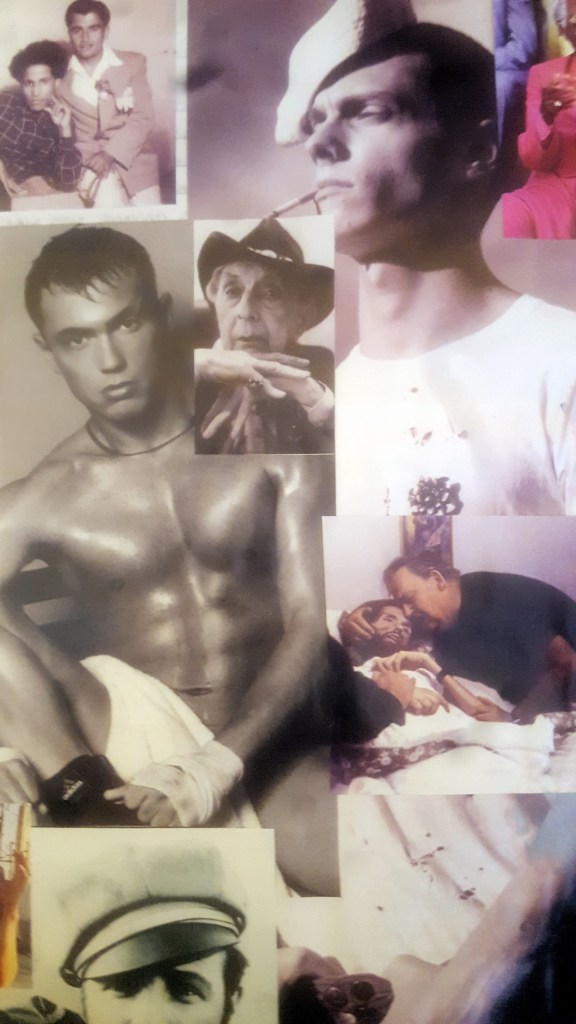
Billy (the Kid).
Thirteen (going on fourteen), with dribbles on his chin.
With cold snot falling (like honey) from his nose.
Which he wipes on the elasticated cuff of his jacket.
A jacket too big.
Because it is a man’s jacket which he stole from a bus shelter.
Sometime ago.
Seven p.m.
Seven p.m. and Billy is in position, with his hands thrust deep into his pockets, his shoulders hunched, his head bent, his right foot pressed flat against the wall behind him, his left leg extended to act as anchor.
Seven p.m. and the wind howls through the city streets.
‘Got any money, mister?’
… comes the call.
‘Got any money?’ (for a poor homeless kid. Hungry kid …. he thinks, but does not say).
With the wind beating mercilessly against him, which would have ruffled his untidy hair if it had not been clamped within a baseball cap, the peak turned to one side, making his face look skewiff (or was it his expression?)
Seven p.m. and the chimes of the great clock are lifted and borne throughout the metropolis, tolling the end of a working day, a workaday, an everyday.
Seven p.m. and the iron grilled door of the ‘Club Mon Ami’ swings open (next to Billy, to his right), like an arm extending in welcome, as if to curl and close around shoulders, as if to hold in an embrace, as if to lead on to the dancefloor and whirl into a waltz, a jive, a slick fandango.
And the music starts up
Slow moving music to fill the empty bar, to waft around the tables, to pervade the enclosed and steadily controlled atmosphere, to mix with the whirr of fan heaters and air conditioners, to start again the nightly interplay, the nightly interaction, the night of revelry and devilry to which ‘Mon Ami’ must bear witness.
Billy watches passers by, and calls to them as they pass by:
‘Got any money?’
Thirteen, with nowhere to go, not to a flat cramped and empty, and smelling of damp.
Where his mother sleeps by day.
Where his mother entertains by night.
Her cries like pain.
(She would not be there now, would not be there for hours, and were she there he would rather avoid her, would prefer not to be that part of her life hidden behind the dividing curtain, with eyes dark accustomed that can see through rents and tears those strange contortions, those frantic manipulations, those brazen bare assed thrusts and throes which bring in the daily bread. Grunts and groans and calculated moans (on cue) to soothe him into sleep.
Better the streets.
Better the city lights.
Better the hope for a hamburger, the craving for a ‘Coca Cola’, the meeting with friends, and the larking, the marauding, the troublemaking.
Better an adventure he did not know than tha monotonous predictability he knew too well, which smelt so warm and close, which sounded so wet and clammy and clam-like, which quickened his breathing along with their breathing, and caused him to masturbate guiltily.
Not old or wise enough to consider her plight.
Big Ben took up his position at the door to the Club, glanced at Billy, set his arms folded across his bulky chest, his legs slightly apart, his thick potato head square upon his shoulders, and imposed.
Right on the street.
Right next to Billy.
(He flicked a wrapped strip of chewing gum over to the kid, who caught it without a smile, slipped off its silver coating, devoured it with peppermint in his nostrils).
Passers by looked into Ben’s ugly face, then swung their head away, and walked away, and put their thoughts neatly away, into enveloped, filed and sealed storage, unwilling to know what they knew.
Those passers by who milled along the pavements of the street, bustling together, battling against the wind, dragging their problems behind them, like so many screaming children, like so many sacks of clay. People weighed down with problems. Problems imposed upon them.
(Problems (they have) imposed upon them(selves)).
Wandering this way and that way with their destinations fixed, or uncertain, or unknown, with their faces long and isolated, untouched by each other, faces with nobody’s cares but their own. They filled the length and breadth of this street, this long and curving street which wound through the heart of the city, a mighty river of cars and pedestrians, of bicycles and policemen, of articulated lorries and linking chains of tourists, a never-ending flow of activity, with its tributaries like arteries pulsing more life into it, from its shops and its ffices, from its bars and its locales, both its daytime and its nighttime caught between, within the buildings, surging along the roadway with the stale air of congestion and the dim light of dusk.
‘Got any money, mister?’
‘Yes’, (said the thin man, the thin man hurrying by, brushing by).
‘Give us some’.
‘No. Why don’t you get off home?’ (said the thin man, looking away, anywhere away).
‘Need some money for me bus fare, don’t I?’
‘Really?’ (said the thin man, stopping to look not at the boy, but at the man near him).
Scan the form of Big Ben (the biggest Ben), his crumpled suit with stretched stitching, his cauliflower ears, his eyes within their creased up sockets, bloodshot, his lips curling, his teeth showing … (and see nothing, see him not, see the path being trodden to lead YOU away).
Billy looks after the thin man, the sleek man, the groomed man, with his manicured nails gleaming clear nail varnish, with his fingers tugging at a flap of dry skin on his upper lip, with his vague and distant air, his unreal, other-worldly air, and spits after him.
The sound makes the man look back and see phlegm land.
He sidles on.
( … and he persuades himself, with rational thought, that sooner or later the kid, that obscene and objectionable street kid, that urchin, will wend his way back to calm respectability, and will be put to bed between crisp cotton sheets, and will be kissed goodnight, and will sleep, with sweet dreams).
Billy, the Kid, with his fly half undone, gaping with Superman’s underpants.
Billy looks around him for his next victim.
… like flies to a running sore, they come, and they go, and he jingles coins in his pocket.
Big Ben grunts his approval.
This haunt, this favourite haunt of young Billy, sheltered beneath the overhanging office blocks (which surge giantesque into the night sky, cool and rigid phalli), with the Club to his right, ‘Mon Ami’ to his right, with a corner to his left, whither he may scamper should the police decide to swoop.
(Policemen who knew he was there but who turned the other cheek, on the whole, like Christians, on the whole.)
And the waste ground behind the concrete pristine facade, where derelict small houses offer themselves for exploration, where tramps congregate and burn their litter fires, where couples court (where prostitutes take their clients and boys wait), men in the throes of their ecstasy too preoccupied to watch their wallets or their cameras or their coats or their hats (or their trousers, sniggered Billy to himself, Ben catching the snigger and watching him, watching the gleam in the gleeful eye, the memory burst like a firework, a memory of a man in socks and an erection screaming blue murder after Billy), and women with their handbags ripe for the pucking, like prize plums, fat with cash, unless they wore the garish make-up of the pro and kept their bags firmly slung around their wrists, as his mother always did, her mind on the money.
Men walk in.
Leather shining and mustachios bristling.
To the Club ‘Mon Ami’.
… voices enveloped by the pulse of the music …
… eyes alert to the dimming light …
Cut off.
In an instant.
From the world which turns its slow and even course around them, which carries on as if without them, which clocks on and clocks off with ageless repetition and does its best to disregard their secret enclave.
Not to know about them.
In the sanctity of the Club ‘Mon Ami’, small club, mon ami, tiny at the side of the thoroughfare, hidden in the folds of the city ( a city so vast that no vantage point can give a view of it in its entirety), they seat themselves at a table and wait for the night to progress.
The night which descends upon the street outside as if tugged by the unceasing winds.
The night which fares in street lamps, which crackles statically into life at the flick of a switch, at the flick of Big Ben’s wrist, who with one careless motion sets ablaze the pink neon sign above the door, the sign which heralds the promise ‘Mon Ami’, ‘Mon Ami’ large and penetrant upon the horizon, ‘Mon Ami’ glaring down to the people, to all of the people, below.
Which bathes the boy’s face in a pink flush.
Billy with the tender pink tinged flesh of fresh meat.
… mon ami.
He waits around here often (if not always he, then someone like him) waits for the other kids whom he knows will come and join him, waits for the men, amongst the swaggering men (with socks down their trousers), those with their collars turned high, looking furtive, glancing from side to side before they enter the Club, who can be stopped, regaled, who can be forced to part with some cash on the words (spoken or intended):
‘Don’t worry mister, your secret’s safe with me’.
Billy the source of this (and much more) knowledge.
Billy the Clever Dick.
Standing in the evening air watching the world go by.
Staring blankly.
At the people who cannot approach.
Those with rolled newspapers and rolled umbrellas and coats buttoned close and snug.
Those who do not see him but who walk with their heads in the clouds convincing themselves that all is right with the world.
(And if they did chance to glance his way then he would poke out his pointed and curling tongue, or hold aloft two fingers, and they would glance to the floor, would pretend not to notice him, that he was not their concern, not their problem – like the people on the underground whom he would stare at unflinchingly, his gaze determinedly unswerving, who would hide behind magazines, or watch their reflections in the window, or would busy themselves reading advertisements displayed above his head, intent upon denying his existence).
When Billy grows up he wants to be the Invisible Man.
(He’s in training).
 Letters to Oscar Wilde