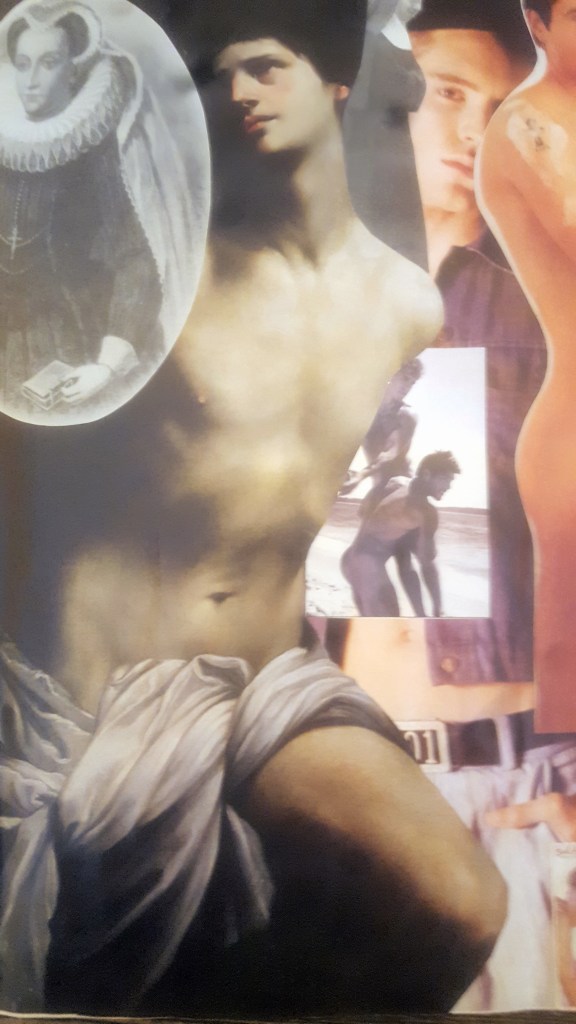
The heterosexual matrix

Dear Oscar,

You were caught within the heterosexual matrix so prevalent in your age, with your marriage to Constance, your fathering of two children, your position in the world as a man about town earning a good living and succeeding in your chosen career. We all now know that this was a sham, or only a part-truth, and that the impositions of such a matrix were not at all appropriate for your actual proclivities. So of course this does raise a question about your being heterosexual, and I think quite equally it also raises a question about your being exclusively homosexual. Maybe you were just greedy, a gourmand out to sate your pleasure principle no matter what the cost, with no thought to the social proprieties by which you appeared to live. I find the collapse of the dichotomous relationship between heterosexuality, with its overarching dominance, and homosexuality, endlessly subsumed and denied, quite fascinating; it seems to prove that neither polarity is near to the truth.

I have friends now, Oscar dear, who play within the heterosexual matrix and give in entirely to the proscriptions that surround them. It is for the women who are around me that I have a certain sympathy, because so many of them, despite the cause of feminism, seem to seek out the heterosexual ideal of the good, solid man, wage earning, dependable, on whom to rely. As a consequence they spend all of their time fulfilling versions of the feminine ideal, to whatever degree, and always to some extent allowing male dominance and decision making to hold sway. I listen to their voices, raised in alarm against many of the men who surround them, and see their lives unfolding within the strictures of the patriarchate, limiting their choices, stunting their growth, and catch myself noting that in very many cases they are playing along with the status quo – saying one thing and doing another. Not that I blame them – it is the power of the matrix to which they accede rather than any consciously personal perspective.

Very frustrating though. From the homosexual point of view, where so many of the structures imposed within the heterosexual matrix have already collapsed, and have to be mimicked in order to gain any validity within that separate sphere of being, there seems to be no escape. So long as we all play along ,the caravanserai simply progresses, always in essence the same.

Are there other ways of being, or do we already know the end of the story?
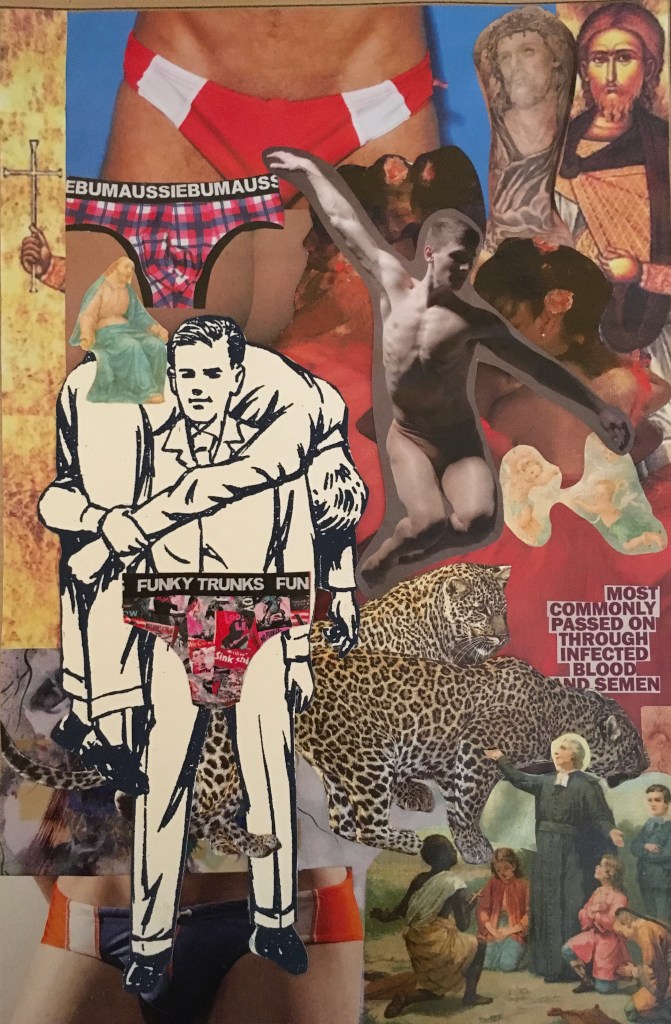
Your friend,

Algernon B. Duffoure.
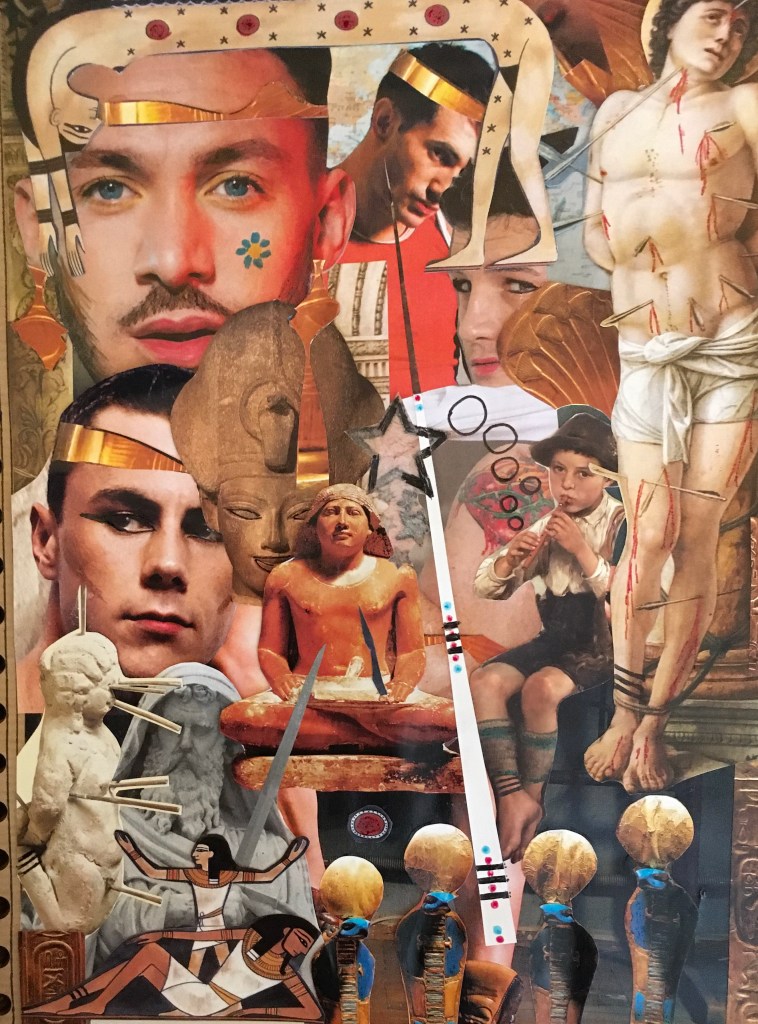
Pleasantries are possible

Dear Oscar,

In amongst all of the high drama of your being it must have been possible to be ordinary, just pleasant, open, accessible, passing the time of day in ways that were fruitful, interactive, with consideration. Or were you one of the those people who simply could not see others, was entirely indifferent to the needs of others, and who was simply not able to see the requirements of others because you were too besotted with the requirements of self.

I am sure you felt, for instance, that you were at several times completely in the sway of young Bosie, and constantly acceding to his demands, but I wonder whether you were giving him leeway because you wanted to keep him with you, and so of course were actually being self-serving even when supposedly being aware of someone else. I have noted it very often in human interaction – even my own, I have to admit; that we think we are being kind and supportive to another when in fact our primary consideration is bolstering the self. It is very rare indeed to see or hear of anything that is truly selfless, and I do wonder how possible it is, given that self-preservation is probably one of the primary instincts with which we as a race are blessed. What is more, it all seems so out of fashion nowadays.

The idea that one would sacrifice the self for some greater good or for the good of humanity as a whole, feels like something that might have been at some time or another, but really is not of the modern era. It is the stuff of a fantasy land – of knights in shining armour, or of Jesus on the cross and his host of self flagellants suffering for the good of us all. Does anyone do that sort of thing these days? Did they in your day, Oscar dear? Or is there always some kind of vainglorious association tied in with such pursuits?

You have yourself been cast in such a light; as if the suffering you underwent somehow had to be expected and endured in order to free future generations from the same sort of persecution. But I am afraid to report that it has not yet worked, not on a global scale (remember, Oscar, people on the planet today can still be put to death for homosexual acts in certain states), and is not even entirely achieved in the more liberal states (fingers still point, crimes are still committed, sexual minorities are still vilified even in the most free countries).

I think what I am arguing is that the price was very high for you to pay, and there is still a price attached, and so that notion of expectation and endurance continues; that of course minorities have to be positioned in ways to commit them to some form of suffering, because it is through their suffering that they are most generally known.

I just think it s possible that everything could be a lot simpler and a lot more pleasant; that acceptance could just mean acceptance. If I can have no expectations of others, and can accept them for who they are, whether that wavers, or is constant, whether it is true, or even false, then surely everyone can. I can assure you Oscar, there is nothing special about me.

Your friend,

Algernon B. Duffoure.
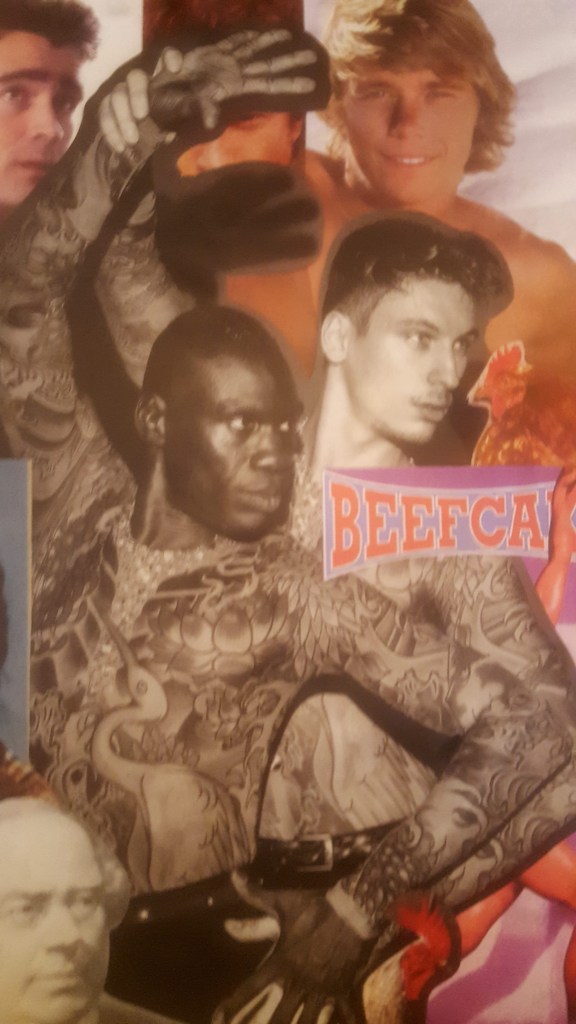
My own best friend

Dear Oscar,

I wonder what sort of a friend you would have been to me, and what sort of a friend I would have been to you! I know there were those – Robbie Ross, for instance – who were devoted to you and endlessly supportive, but I fear I may have been the sort of person to be slightly wary of you, and not be particularly supportive of your worst crimes. I do not know, it is very hard to say because we are from different eras, and different social milieus.

I think I am a little judgemental, even to myself. If I were my own best friend I might well be quick to criticise, and also to condemn should I ever step out of line about anything. If I am ever speeding in my car, then there is always a voice in my head which slows me down, keeps me within the legal allowances, points out, as a friend and a confidant would, that there will be a heavy price to pay if I am found out, or if I cause any sort of accident. I am something of a sage counsellor, always thinking through the various ramifications of any course of action. I sometimes try the experiment though of being my own best friend, and of imagining what it would be like if I were looking at myself objectively, and could offer advice as only a friend can. Would I encourage myself to be more adventurous, to break the rules, to be more selfish and self-seeking? The position of the best friend may not always have in mind the best outcomes for the one who is befriended. In fact it might be argued that because it is something of an objective relationship, then the friend can project on to the other all of the possibilities that s/he is too averse to taking.

I think you would have ultimately been a caring friend, Oscar, someone who cared for the others who were in his life, as I must be to myself.

Best wishes, as ever,

Algernon B. Duffoure.

Under pressure

Dear Oscar,

I wonder if you will be able to relate to anything that I am about to tell you.

You died over one hundred years ago, which seems to me to be a blink in the eye of the earth’s history, and just a moment in the history of humanity, and yet in that time there have been so very many minor changes to everyday existence, that I wonder if you would recognise at all the lives that we now have to lead. Your death, let’s face it, which was horribly premature, really only occurred a couple of generations ago, and had you survived into a ripe old age you may well have seen many decades of the twentieth century. To a young whippersnapper of today you could be a great-grandfather, and to me, teetering beyond middle age, you could have been a grandfather. But I fear my life experience would be totally alien to you, pressured as it is by the nonsensicalaties of the humdrum.

I think that even the language that I am about to use would not be easily understood, and have just put into quotation marks all those elements that I think you will have difficulty with. I know you cannot correct me if I am wrong, but I am not expecting to be wrong, able as I am to chart developments over a century or so.

So, these are the events that have put me under pressure today:

The ‘batteries’ in my ‘remote control’ for the ‘television set’ which I own have ceased to work, and so they needed to be replaced. Before I left my home to go to the ‘supermarket’ I needed to remember that given the effects of the current ‘pandemic’ I would have to take a ‘face mask’, and, because of the effects of ‘global warming’, a ‘reusable plastic bag’. I checked my ‘bank balance’ ‘online’ via my ‘mobile phone’, and set out. The pressure was building because funds were not as high as I had expected, and the ‘elastic’ on the ‘face mask’ is given to snapping under duress. At the ‘supermarket’ a ‘traffic light system’ shone green and allowed my entry, and I used the ‘hand sanitiser’ before wheeling out the ‘trolley’. Now the ‘face mask’ steams up my spectacles, so I had to remove them and put them into my pocket, along with my hat, because I could not put the ‘elastic’ of the ‘face mask’ over my ears until they were suitably revealed. This meant my head was cold, and I could not see clearly; I certainly could not read the all important ‘small print’ which accompanies every item under consideration for purchase. However my quest was underway, and the suitable ‘batteries’ were found, and there was a selection of different ‘brands’, all ‘advertising’ their differences, and their ‘price ranges’. Again, this prefigured more pressure; I had after all checked my ‘bank balance’, and wasting money on a supposedly superior ‘brand’ seemed foolhardy. I opted for ‘mid-range’, paid by ‘debit card’ at the ‘cash desk’, removed the ‘face mask’ outside the store, replaced my spectacles, and put the hat on to my now distinctly chilly head. I had not needed the ‘trolley’, so it was pushed back into position, but not before locking it and retrieving the coin which had allowed me to have it in the first place. Back at home I have been able to replace the ‘batteries’ in the ‘remote control’, and so can now happily while away the hours watching the drivel which is ‘beamed’ to me ‘digitally’ should I really wish to do so. A source of more pressure, I can tell you, besieging one’s mind with nonsense, empty aspiration, and of course endless ‘product placement’. Whatever you are able to understand, Oscar dear, I am sure you see that basically one can bring on one’s own demise in this day and age through ‘anxiety’ and ‘worry’, through interminable pressure, and all for nothing, or very little, at all.

Forgive such selfish tripe, Oscar; I know you had greater concerns, but I do wish to highlight to you that what you miss by having lived a century or so ago is actually not so much. All of the significance of our current age, our successful mass communication techniques, our digital economies, our ease of availability and of indulgence, seem of little real value, bring endless personal challenge and discomfort, and their insistence adds to feelings of unending pressure.

Ah, to breathe.

I took a walk in order to achieve the above and so was able to breathe fresh air.

To breathe fresh air.

Your friend,

Algernon B. Duffoure.
Seeing the future

Dear Oscar,

I was wondering if you knew what was happening to you, and if you could foresee what would happen. With the benefit of hindsight it all seems utterly predictable, as if you should have seen what was about to occur, that you could have planned differently, been more aware. I am wondering now if that is the case for all of us, that there are set inevitabilities about existence, and that all we can do is welcome each of them as they come. Very little happens that is truly surprising, that is so out of the concept of the ordinary that it becomes even remarkable.

Yes, there are natural disasters that suddenly crop up on news media that make us all sit up and think, but I wonder how unusual they are for the people affected, or for the people who have been arguing that these supposedly freak occurrences were bound to happen at some point in time. There is always some cause to whatever effect, even if it is one that is not readily foreseen. It is almost as if we are actually taught to ignore the obvious. I am in pain. I ignore the pain. I self-medicate in one way or another in order to try to suppress the pain. I seek medical advice and they too work to suppress the pain. But the pain persists, grows, becomes something more difficult to conquer. I die, it is reported, happy, and having lived a fulfilled life. That old story. Nobody seems to want to investigate the pain. My village cannot fish because oil tankers have polluted the water. People keep jumping from the top of tall buildings. Oscar, I do wonder if we ever learn anything of value at all.

With best wishes to you, as always,

Algernon B. Duffoure.

A state of wonderment

Dear Oscar,

My state of wonderment is not at the effect of all that surrounds me, is not the appreciation of all of the elements of being, nor is it any form of sensory overload – it is all about wondering.

If you had lived.

If you had never got into so much bother.

If some level of tolerance and understanding could have saved you from persecution.

Today such levels of supposed tolerance and understanding do exist, but the same parade of characters and caricatures populate popular consciousness, are displayed within the media, all doing what they have been doing certainly since your time, and probably a lot longer. Women simpering around men, gay men kept in the background, or allowed to perform, to reveal levels of absurdity, make everyone laugh.

Things have moved on, things have not moved on at all – it is a constant theme of mine, Oscar dear, because I just keep on being reminded, and I do not have to wonder for very long, how things would be if …. because they never are.

The dominant order asserts itself, and reasserts itself.

I remember that when you were in prison they put you on a treadmill, and do you know, Oscar, that in the United Kingdom the use of the treadmill as a punishment for misdemeanours was outlawed by the Prison Act of 1898 – one year after your release. Ah, the hands of fate ……

Only ever variations on a theme.

Best wishes to you,

Algernon B. Duffoure

.

What we have

Dear Oscar,

I know that your incarceration will have been a very low point in your life, but it has crossed my mind that actually it served you well in unexpected ways. You did after all write the epic letter to Bosie, ‘De Profundis’, a great work which reverberates its truths through history, and you were inspired to compose the poem ‘The Ballad of Reading Gaol’, which similarly now holds an enviable position within the canon of world literature.

What is more, in the depths of such deprivation, you were thrown back on to yourself alone, with none of the stimuli of the world in which you had so eagerly moved, none of the distractions, the pretences, the dreamy romanticism. It is no doubt true to say that I have no idea of what it must have been like, and never can have, because such regimes are lost to us, altered through time, different in the ways they take their effect and have their impact. The world in so many ways is seemingly so different. Yet I cannot help thinking such a level of loss, of enforced denial, that the inability to sate the excessive appetites of success and celebrity, may in turn lead to some appreciation of what we all truly have, which is very little, which is only ourselves. I know that public censure must have been extremely hard to bear, but to recognise the nobility of the self even in the face of castigation, to see that the two lungs will breathe, the heart will beat, the senses remain, must have offered some little solace. It is all just making me appreciative of the fact that I have all of these things and also my liberty (such as it is in our modern era).

I am increasingly aware that my possession of health and well-being are the most powerful tools that I have in navigating my way through a life which is not uncomplicated, not un-beset by daily issues, by problems great and small that arise from time to time, by expectations and disappointments, by dashed hopes and broken promises. Thinking of you, Oscar dear, leads me to acknowledge that the most basic of advantages that all of us possess, just the breath that flows, the blood that pumps, is enough; everything else is ‘icing on the cake’.

I have a part to play in maintaining my health, my mental stability, my feelings of ease, my joie de vivre. I feel in some sense that I have a duty to myself, that I must expect of myself not an unwavering recognition of my needs, but always the ability to pick myself up should I fall, to set myself back on a familiar path should I digress, to keep on taking steps forward. I, like the majority of the earth’s inhabitants, the overwhelming majority, perhaps even, in some sense, everyone, can transcend, remind, imagine, reach. I am presented with choices at every juncture, and I have the ability to make choices that are of help to me and my world. It is, in so many ways, a glorious thing to be thrown back upon one’s own resources, to have to manufacture for oneself the road map leading back to some sense of salvation, of preservation.

I am happy.

I can continue to be happy.

Your friend,

Algernon B. Duffoure.
In the now …

Dear Oscar,

I wonder what happened to you when you received the missive from Queensberry, Lord Alfred’s father, calling you a ‘sondomite’ (sic). I suspect that you flew into an over-emotional rage, or maybe you rolled your eyes in a world-weary way, or guffawed at his poor understanding of the English language, or felt superior, probably that above all, felt superior to his brutish ways with your over-developed sense of aesthetic propriety. It must also have been very strange, in that moment, to be confronted with some level of truth, if truth it were, that you were a ‘sondomite’ (sic). It must have been disconcerting in the back of your mind, thinking over the many conquests that you had enjoyed, the interplay with the ‘street-arabs’, the establishments through which you had prowled in your search for the ‘panthers’. Even if in actuality you had never practised the art to which ‘sondomite’ (sic) refers, I am sure there was the ring of truth to the accusation – remember the ‘soiled sheets’ that were referenced by the chamber-maid at your trial, or did she lie? Was she paid to lie? That ring of truth must have smacked you hard, caught you sharp, made the very instant when you read the word – ‘sondomite’ (sic) – one that chimed sonorously something of a death knell in your mind, a reverberation that has never left you through history.

I am concentrating upon it, Oscar dear, not because I wish to torture you in any way, not because I wish to bring up the most painful of memories for you (and I am sure this was not the most painful), but because I am interested in what we all do when moments occur that rattle our being, shake us to the core, make us stop and stand still, and start to think things through. My suspicion, as I say, is that you reacted in an over-dramatic way to the accusation, whether or not that was made manifest in your behaviour or outlook; I suspect that inwardly you ‘flipped’. This of course jeopardised the next few moments, and then put into question your reactions as they ensued, as it must for all of us, when we are shocked, when we are caught up short. Those ripples of after-effect come to condition to no small degree all that happens next, but only moment by moment, each second unfolding, becoming something in itself, building up the slow minutes, and then the passage of time, and then those little ripples swell to be a tsunami. It puts into our own hands a huge amount of power, as orchestrators, as directors, as the ones who are in change of fate as it unfolds, the future as it is made known, destiny. There is probably a time for the over-dramatic, for the flying off the handle and taking sudden control, but is it a time linked to high emotion, linked so inextricably to fear, making of each act, each singular response, something of a portent? My dawning understanding is that in those moments our actions may well be ill-judged, and not fully formed, and not take into account all of the many influences and variables that might come to take effect. For you, Oscar dear, with your wounded pride, and your public reputation to defend, and the investments of those who were close to you, those who were benefiting from your wealth and your celebrity, it was the precursor of a now infamous doom. Or so the narrative goes. That is the story that is told. It may be true, it may only be an interpretation. It may be myth. What we know however is that you were carted off to a prison cell, that you did undergo what was known as ‘hard labour’, and that your career was left in tatters. Rightly or wrongly, justly or unjustly, that bears the ring of truth.

My own interpretation is that you did not remain steady, and that your ego came to the fore, and that you played a greater part in your downfall than might at first be acknowledged, that in effect you were not only a victim of the age, but an architect of it. Now I know that you were given few choices, that as the net tightened around you there were fewer and fewer outcomes possible that might have brought to you a different fate, but I cannot help thinking that choices are always present, no matter the circumstance, and that therefore different conclusions can be reached. You may not have come to be a symbol of your age, nor a touchstone for liberatory potential, but you could have been a happier man. It is a question, is it not: to put yourself on the cross to be crucified, or to live on?

I am presented with my moments, moment by moment, the now, and now, and now. The lessons to be learned from your example reach deeply, and take me into contemplation, and make my choices ever manifest …

Your friend,

Algernon B. Duffoure.

Inviting Pressure

Dear Oscar,

Of course I know that what you chose to do – to stay and face the music, to own up to your approach to life and aim to justify the ways in which you chose to live – became a cause célèbre that has come to influence the ways in which more modern societies have developed. I know that by being steadfast you did uncover a side of your world’s mores that could be objected to, that probably needed reform – that in being addressed has put right some wrongs and opened up alternative ways of being. Nevertheless, I am being slowly persuaded that so much of what ‘hits the headlines’ and becomes the touchstone of an age is in actuality a lot of fuss about nothing. It just seems to take history for that to be the case, and the generation and popularisation of sets of ideals that go against whatever it was that caused the ultimate umbrage at the time.

You see Oscar, you did, in hindsight, sort of invite disaster, and a huge amount of pressure to be heaped upon you – so much, it might be argued, that it was impossible to behave in any way that might be deemed rational. You steadfastly held your position, and although that may be seen as laudable, the price you paid was so high as to deny you existence at all! Did that have to be the case? And did it have to be the case that your legacy of martyrdom still sticks like a mal odeur even around the modern depictions of the homosexual? I think of the century of suffering that has been enacted since your too early departure from the planet, the inevitable fight for freedom of expression, the fiery street protests, and the battles that were fought with words, and with rocks, and bricks, and cricket bats. It may have all been inevitable, but I do just wonder. I do just wonder if not inviting disaster might also have been an option; that you could have exited to Europe and used your mightiest of weapons, your pen, to argue for a more just society where there would not be persecution – which also had a ring of inevitability about it, as all societies were advancing in the greater sense, and still are around the globe, and ‘old’ ideas become replaced with ‘new’ ones, and democratisation, such as it is, for now, seems to hold some sway. Do you really believe that without your humiliation and suffering there would have bee no gay liberation? Somehow I think it would have been different. I worry that the taint of your treatment lingers even in the face of the most advanced developments. I worry that I need to worry, and that is both the point of this letter, and what I most ardently wish to subvert and deny.

All may not be so well with the world, and all of us carry some worldview where we know of instances where there are injustices and misdemeanours, but it is also true that all is also well with the world, because flowers do continue to grow and bloom – even green carnations! I know as well as you did that I can provoke disaster, that I can invite pressure into my life, that I can cause a stir, worry myself silly, pick and probe and prod and upset everyone who surrounds me, but I do wonder to what end? To get my own way? To be right about whatever it is that I wish to undertake? To try to mould the world in its entirety to my point of view? It all seems rather foolhardy, Oscar dear, when it is obvious that humanity loves humanity, and always will. The differences and the factions and the fights and the oppositions are so few and far between compared to the commonalities of being: the air that we all need to breathe; the water that we all need to drink; the sustenance that we can engender for ourselves, in all its forms, for our mutual well-being.

I am doing my utmost not to invite pressure into my life, Oscar, without compromise and with a sense of being true to myself and my world. I wonder what your life would have been if you had been able to do the same.

Your friend,

Algernon B. Duffoure.
Change

Dear Oscar,

I have been thinking a lot about change.

I get the impression that despite the absolute censure of the society around you, your imprisonment, your public castigation, your personal degradation, you did not change so very much. I think you believed that you were right in what you thought, and that your actions, however they may have been interpreted, were just. I am sure that you thought that the world around you was wrong, and that you were right.

We all do. We all hold on to fundamental beliefs that we have been conditioned to accept, or that our personal circumstances have drawn us towards, or that our society dictates. The vast majority of us tend to accede to the dominant sets of opinions, to go with the flow, not to question in any fundamental way what we have been taught and what we have learned, in the very broadest of senses. It has made me think that we hold on to belief systems that are the dominant order, even when they are doing us no good, even when they are set against our growth, our potential, our reaching of our zenith. So, if we were citizens of Ancient Rome, we would believe that slavery was acceptable, needed, simply the norm; we would ‘go to the games’ and expect to see bloodshed, to witness death, a pantomime of murder played out before us. If we were eunuchs at the court of Imperial China we would accept that our manhood was removed, that our opportunities to procreate would disappear altogether, that our lives would be about administrative service. If we did not accept these things then we would be cast out from these societies. In the England of the nineteenth century you, dear Oscar, had to accept that your behaviour with the ‘rentboys’ was seen as scandalous, was unacceptable to the world in which you moved so easily, was the ruination of your reputation, your career, your liberty. Whether these things are ‘right’ or ‘wrong’ is only the decision of the age; if they are deemed ‘wrong’ then there is a price to pay.

This has made me reflect upon change that is personal, the decision to alter one’s diet, to give up a bad habit, to shift one’s perspective. It seems to me that this is so very difficult because there is a deep-rooted fear that change itself will bring uncertainty, and uncertainty throws into chaos the long-held beliefs that make up a being. If I believe that being a ‘good’ person means that I will be rewarded, or can reward myself, with sugary treats, then I am actually doing myself a disservice as I ‘pile on the pounds’, compromise myself with the possibility of diabetes, put my heart under strain; when that is the dominant belief then rewarding oneself with an apple or an orange seems to go against the grain, take away the very belief that I may see myself as ‘good’. To give up smoking cigarettes when one sees oneself as the contemplative coffee shop visitor, veiled and wreathed with foul scented smoke, thinking through, with crossed brow, one’s place in the world; when one is the professional cook, ladling on cream, slapping around pounds of butter, producing celebratory cakes (because there is no celebration without a cake). It makes my head hurt, Oscar, even to start to think about it all.

You see, Oscar, I see very clearly my faults, as I am sure you did too; it is whether I actually want to do anything about them, to change the essence of my being, that becomes the central question.

I will let you know,

Your friend,

Algernon B. Duffoure.