Trip to the park.

My dear Oscar,

I took a trip to the park.

These were my impressions:

She knew, as soon as she walked into the cafe-cum-shop that was located in the middle of the park, that she was destined to buy much more than she actually wanted or needed.

“Oh – and an ice cream – yes, just vanilla – and one of those tray bakes – the flapjack – yes, with the chocolate chips.  Frothy coffee – large – and I’ll take a packet of those shortbread biscuits too, for later.”

She knew that she was lying, and slowly rubbing her pregnant belly she paid for all of her items, and imagined herself on a bench, sitting alone, devouring the whole lot.  It happened …

… and the breeze blew through the leaves.

His dog, old, but pert, grey haired like his master, could smell something that he found extremely attractive on the ground, and could not help himself but to roll onto his back, with his legs up in the air, and squirm and soak up the scent.

His master stood at a distance, watching, allowing this indulgence.  He was unconcerned and turned on his heel and started to saunter further away.  The little dog flipped into upright, stared through bleary eyes into the distance, was immobile apart from the quivering wetness of his black padded nose, picking out the odours prevalent, the smells that engulfed his very being.  He idly sought the shape of his master, just noticing the ambling outline in the distance, trotted towards him, was waylaid by some hot meaty and fatty sauce emanating from a child eating a burger at some considerable distance, saw his master again, trotted on, light on his feet, nimble.  His master barely waited for him, their companionship so close and so reliable that even at a distance they were always together, having learned to be tolerant, to put up with the peccadilloes.

Dinner time soon, he thought, with the burger smell still hanging slick in the atmosphere; I shall fry a fillet steak and I shall open that bag of oven chips ….

… leaves, green, twinkling in the sunlight.

… the bough of the great oak tree was a miracle, growing at a horizontal angle from the side of the trunk.  It wended a spidery web into the atmosphere, and just, … how powerful must that age old tree be to bear the weight of that horizontal bough, to keep it in place, to stop its great, great weight from crashing and falling.

Stately, and gargantuan, and forever.

“It’s nice, isn’t it, that they stayed friends”.

“Hm”, he said.

His hairy legs were out in the sunlight, manly strides as she bounced at his side, holding his hand as if she had to.  Really they looked like children, too young to be so committed, building a life together, planning a whole existence.  And it was clear that she got on his nerves something dreadful, but there was nothing to be done, they had decided, they had been kicking around together for a few years now, since university, and so their future was unfolding on a set path to which they gave very little thought.

She grated on him, with her plaintive whining, her neediness, her clinging stickiness, her ‘reward you with sexual activity’ attitude, minor sexual activity, predictable, just enough.  He knew already that the years would slip by, with a baby or two, and his hard work, his never ending work, and the mortgage, parents, get togethers, Christmases, Easters, New Years, just years and years, and already he just wanted to scream.

… a squirrel, like an undulating wave, hopped across the expanse of lawn as if nobody was there, and then scurried straight up one of the biggest trees, with a vertical climb that rattled audibly, just pin-pricked its way up tha bark, and was gone into the foliage.

He walked to the park.

His baby was dead.

His wife was alive.

He walked to the park.

They were jogging.

They were cycling.

They were out in their cars.

Everything that they were doing went no higher than two metres, just a seam of activity, babble, interaction, caution, wide eyed wariness.  Dogs and children and adults and the aged doddering along.

Just above them all, just a few centimetres above them all – the earth soared.

My best wishes to you, as always,

Your friend,

Algernon B. Duffoure.
Of this time

Dear Oscar,

Just to let you know that I have not forgotten you.

The genger battle of our age is no longer solely about sexuality but increasingly about transitioning from male to female, or vice versa. There are now, in certain countries, protected rights to choose gender, and the more I research into it the more apparent it is that some level of choice has always existed. It is about whether or not one accepts the interplay of gender stereotypes as they exist within any given culture or whether one subverts or challenges those self same stereotypes.

The debate also undermines the definitional stance that many cultures assign to gender as a concept, something I am increasingly coming to question. Oppositional definitions and binary polarities seem to me to do a disservice to the potential of whole human experience. It seems to me that the possibility of merging opposition would be preferable, and that losing the pretence of clear cut definition would serve humanity better.

Were you a saint or a sinner – who is to decide?

As ever, your friend,

Algernon B. Duffoure.

As if nothing is happening

Dear Oscar,

I hope you are at peace, rested, unassailed.

The daily assault of the mass media has already come upon me, as it is absolutely unavoidable in this modern age. I believe that you had newspapers to read, and even some black and white pictorialised magazines to consume, and that in the major cities young lads would stand on street corners and yell out the headlines in order to attract the purchasing of these organs. I believe that may have been the sum of the media. Apart from the theatre performances for which you were so famed, only accessible to the chattering classes, who would then chatter about the contents of the plays they saw upon the stage. Nothing more. Nowadays barely a moment goes by without mediated stories assaulting the populace from all angles, most pointedly now in the palm of one’s hand, as the mobile telephone ‘pings’ its unending importance, bringing us all what is termed ‘the rolling news’. It seems to be of significance for our culture to note that something is happening all of the time!

The peculiar thing is that once one sits back from it, mutes all of the noise, even ignores its insistence, that nothing really seems to be happening at all. There are endless sensationalised fusses made about supposed advancements in human achievement, both negative and positive, with details pored over and ‘evidence’ presented, but none of it really seems like very much at all. Man (or woman, or to my mind, human personage) climbs yet another mountain, and another one, and another one. It is as if humanity has to prove that it can overcome hurdle after hurdle that is set before its way – much of which, it has to be said, is self-imposed. We will defeat climate change (something that we, apparently, caused); we will restore the earth’s resources (all of which we greedily consume); we will conquer any threat to life that comes our way (even though we are the greatest threat to human life, over and over again). It is that last mentioned quality which hits me so hard the more that I think about it; the fact, dear Oscar, that it is ‘over and over again’.

These supposedly grand achievements dominate the headlines, relay to us all the victories and the conquests, the heights that we are able to scale, the grandness of our being, as a race, as a human race. I cannot help thinking that it is in our smallness that we are actually greater, far greater, and under-reported, under-represented, and under-recognised. Kind gestures; smiles; encouragement; the old person diligently avoiding the purchase of plastic; the young person deciding never to own a car; kisses; concerns; delivering shopping; singing a song, under one’s breath, on a bus, on a train; generosity which means sharing a meal, dropping a coin into an outstretched hand, buying a coffee with no requirement for payback; writing to a condemned man, a man condemned by history, martyred, remembered with reservation, and pledging,

I am, as always, your friend,

Algernon B. Duffoure.

Contemplating agedness

Dear Oscar,

You did not reach a ripe old age yourself. It is a great shame that your treatment at the hands of the judicial system basically contributed to the foreshortening of your life, so that you reached only your 46th birthday. I for one am sorry that this was the case. In fact in your age, the late Victorian age, life expectancy for men was not too dissimilar from the age that you reached, although the prevalence of infant mortality skews somewhat the recording of accurate death rates. Nevertheless, lives on the whole were not long, and certainly not as long as they have come to be all these years later. Now it is common to hear of people living until they are over 100 years old, at least in the West, where not only medical advancement, but also economic plenitude, ensure that many are well cared for into their dotage.

What happens to them though is a different thing altogether, and comes to be slightly alarming. In the countries you inhabited, in Ireland, the UK, France, and even America that you visited, it seems to be the case that the aged are not treated with veneration, but are more often than not parcelled off into care homes, to be kept out of the way, and to lead quite restricted lives. Any health issues become the dominant issues of existence, and since the medics have plied these people with drugs for half of their lives, very often there is the onset of dementia, and of Alzheimer’s disease, taking their toll upon any quality of life. Through this age of the pandemic of Covid 19 the very aged are kept isolated completely from the rest of society, even from their loved ones, in efforts to keep them alive and well (something which of course fails because these people are already old and frail). I must say, Oscar, I do find it bizarre that such efforts are made to keep people who are at the end of their lives going, celebrating the fact that 96, 97, 98 year olds keep on living within their peculiar rest home scenarios, while young people are sent out on to battle fields, are put in dangerous positions everyday, sometimes losing their lives pointlessly. Cars still zoom around cities, polluting the very air that we breathe, mass production of plastics persists, choking natural resources like waterways and seas and oceans, landfill sites become poisoned deserts where certain members of humanity have to eke out a living – and yet, where there is privilege, where there is plenty, keeping a few doddering old folk going beyond any version of a natural end is the priority.

Now I know I am being controversial, and that one day I may well be one of those ancient crones, but I pray to the memory of you Oscar, that should I find myself in such a position I will be fit and healthy and compos mentis. From my standpoint, as it is, in the present, I cannot think of anything worse than a gang of experts making decisions for me and choosing to keep me going no matter what state of being I may be in.

Oh, and it does have to be said – being very very old and very very gay may be a mix that is difficult to endure – unless of course I happen also to be very very well and very very rich too!

Your friend, as always,

Algernon B.Duffoure.

A state of wonderment

Dear Oscar,

My state of wonderment is not at the effect of all that surrounds me, is not the appreciation of all of the elements of being, nor is it any form of sensory overload – it is all about wondering.

If you had lived.

If you had never got into so much bother.

If some level of tolerance and understanding could have saved you from persecution.

Today such levels of supposed tolerance and understanding do exist, but the same parade of characters and caricatures populate popular consciousness, are displayed within the media, all doing what they have been doing certainly since your time, and probably a lot longer. Women simpering around men, gay men kept in the background, or allowed to perform, to reveal levels of absurdity, make everyone laugh.

Things have moved on, things have not moved on at all – it is a constant theme of mine, Oscar dear, because I just keep on being reminded, and I do not have to wonder for very long, how things would be if …. because they never are.

The dominant order asserts itself, and reasserts itself.

I remember that when you were in prison they put you on a treadmill, and do you know, Oscar, that in the United Kingdom the use of the treadmill as a punishment for misdemeanours was outlawed by the Prison Act of 1898 – one year after your release. Ah, the hands of fate ……

Only ever variations on a theme.

Best wishes to you,

Algernon B. Duffoure

.

An alternative

Dear Oscar,

I hope this letter finds you well. I hope that your presence across the span of history is somehow at ease, and that you can view from your vantage point with compassion. After all, your own faults were more known to yourself than they were to anyone else, and that is true of all of us.

I have been writing to you recently about how slowly time advances, and how changes in opinions and social mores are even slower, but that if we wait long enough, and look back through aeons, there are indications that some elements of human evolution are to the benefit of man, and beast, and planet itself. Admittedly they seem few and far between, particularly as the worst possible elements of human interaction keep on reasserting themselves, even in the face of the best. I suppose one has to assume that it was ever thus – but I wonder if that need be the case?

Evolution seems to imply a state of being that is not one of stasis, that there is movement, that there is change, that alternatives come into being. I have been giving this much thought, as set in my ways as so many of us are; as you were, Oscar, even to the point of your own demise. Is the failed hero a real hero?

It seems to me that change comes also very, very slowly, and that in reality change comes in the smallest of moments, the tiniest of gestures, in those quick and fleeting seconds where one actually does do something that one did not do before. I think that it is in its insignificance that its actual significance lies. Taking an alternative route, a different course of action, and actually making a decision that is unlike decisions that have been made before, that would seem to me to indicate real change. It is as simple as choosing not to butter one’s toast in order to reduce one’s fat intake, and then repeating the action, day after day, until a ‘new normal’ comes into being. Not to put the cigarette to one’s lips; not to fill the glass of wine brimful; not to ignore the neighbour as they appear in their garden, but to say: “Hello”, and then to say: “Hello” again; not to put one’s cross into a familiar box on the ballot paper, just to move one’s hand, just before it happens, whatever the consequences may be imagined to be. Taking the alternative, with precision, or sometimes recklessly, and re-charting the course.

If you, dear Oscar, had not …. but then of course, you did.

Your friend,

Algernon B. Duffoure.
In the now …

Dear Oscar,

I wonder what happened to you when you received the missive from Queensberry, Lord Alfred’s father, calling you a ‘sondomite’ (sic). I suspect that you flew into an over-emotional rage, or maybe you rolled your eyes in a world-weary way, or guffawed at his poor understanding of the English language, or felt superior, probably that above all, felt superior to his brutish ways with your over-developed sense of aesthetic propriety. It must also have been very strange, in that moment, to be confronted with some level of truth, if truth it were, that you were a ‘sondomite’ (sic). It must have been disconcerting in the back of your mind, thinking over the many conquests that you had enjoyed, the interplay with the ‘street-arabs’, the establishments through which you had prowled in your search for the ‘panthers’. Even if in actuality you had never practised the art to which ‘sondomite’ (sic) refers, I am sure there was the ring of truth to the accusation – remember the ‘soiled sheets’ that were referenced by the chamber-maid at your trial, or did she lie? Was she paid to lie? That ring of truth must have smacked you hard, caught you sharp, made the very instant when you read the word – ‘sondomite’ (sic) – one that chimed sonorously something of a death knell in your mind, a reverberation that has never left you through history.

I am concentrating upon it, Oscar dear, not because I wish to torture you in any way, not because I wish to bring up the most painful of memories for you (and I am sure this was not the most painful), but because I am interested in what we all do when moments occur that rattle our being, shake us to the core, make us stop and stand still, and start to think things through. My suspicion, as I say, is that you reacted in an over-dramatic way to the accusation, whether or not that was made manifest in your behaviour or outlook; I suspect that inwardly you ‘flipped’. This of course jeopardised the next few moments, and then put into question your reactions as they ensued, as it must for all of us, when we are shocked, when we are caught up short. Those ripples of after-effect come to condition to no small degree all that happens next, but only moment by moment, each second unfolding, becoming something in itself, building up the slow minutes, and then the passage of time, and then those little ripples swell to be a tsunami. It puts into our own hands a huge amount of power, as orchestrators, as directors, as the ones who are in change of fate as it unfolds, the future as it is made known, destiny. There is probably a time for the over-dramatic, for the flying off the handle and taking sudden control, but is it a time linked to high emotion, linked so inextricably to fear, making of each act, each singular response, something of a portent? My dawning understanding is that in those moments our actions may well be ill-judged, and not fully formed, and not take into account all of the many influences and variables that might come to take effect. For you, Oscar dear, with your wounded pride, and your public reputation to defend, and the investments of those who were close to you, those who were benefiting from your wealth and your celebrity, it was the precursor of a now infamous doom. Or so the narrative goes. That is the story that is told. It may be true, it may only be an interpretation. It may be myth. What we know however is that you were carted off to a prison cell, that you did undergo what was known as ‘hard labour’, and that your career was left in tatters. Rightly or wrongly, justly or unjustly, that bears the ring of truth.

My own interpretation is that you did not remain steady, and that your ego came to the fore, and that you played a greater part in your downfall than might at first be acknowledged, that in effect you were not only a victim of the age, but an architect of it. Now I know that you were given few choices, that as the net tightened around you there were fewer and fewer outcomes possible that might have brought to you a different fate, but I cannot help thinking that choices are always present, no matter the circumstance, and that therefore different conclusions can be reached. You may not have come to be a symbol of your age, nor a touchstone for liberatory potential, but you could have been a happier man. It is a question, is it not: to put yourself on the cross to be crucified, or to live on?

I am presented with my moments, moment by moment, the now, and now, and now. The lessons to be learned from your example reach deeply, and take me into contemplation, and make my choices ever manifest …

Your friend,

Algernon B. Duffoure.
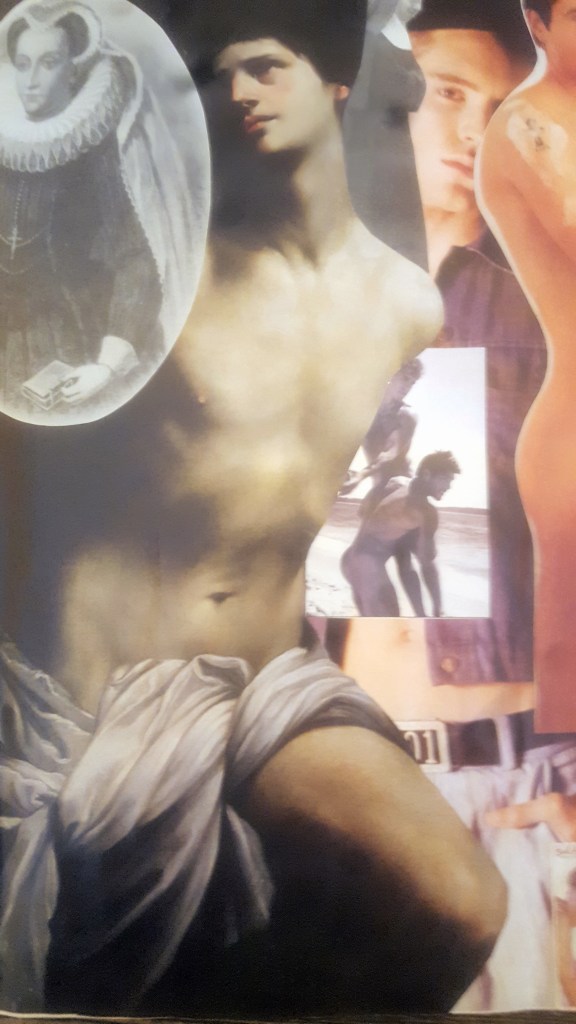
Levels of Irritation

Dear Oscar,

The wind is blowing today. I expect you listened to the wind from inside your cell, as well as witnessing it in all its fury within society. I find it is beginning to irritate me.

It is irritating me not because there is anything particularly unusual about it, not because it is a more terrifying wind than there has ever been, and not because it is destructive, or incessant, or creeping in between the gaps of the buildings I inhabit; it is irritating because I am allowing it to be.

I think of nagging children who pester and cajole, but who of course give up entirely if one does not accede to them; of pet dogs who want to be stroked, to be played with, to be the centre of attention, but who slope off to sleep if one does not participate, waiting at the sidelines until one is ready for them. I think also of my amounts of money, that flow in and out of my life, of the anxiety that accompanies them. When there is much, I worry about the amount disappearing, and when there is little, I worry that I will not have enough; all absurd, pointless and absurd.

Like you Oscar, as is evidenced in the works that you left behind, there are very many things that irritate me, and I have to acknowledge that I am very easily irritated. The banalities of a class system which oppresses not only those who are oppressed but also the oppressors, who have to conform to set standards, who live in shabby gilded cages, working within the narrow confines of their pretended respectability. The denial of natural love, of all the many loves that have dared not speak their names, the ways of being between peoples that are gentle, and friendly, and giving, the loves that radiate in small scope from those at the touchline watching the absurdities of action. All of the mothers, all of the siblings, all of the quietly watchful, holding hands and caressing, putting their loved ones to bed with kisses across the eyelids; the many loves that are not sensationalised, and which continue, beneath the surface, barely acknowledged. Even those that involve desire, regulated, careful and caring, a man with his arms around the shoulders of his closer than close buddy, and a young woman kissing her girlfriend goodbye.

It just seems to me, Oscar dear, that irritations are largely invented, and allowed to fester, and if they are truly real they can be addressed. But if they are the buzzing of the bees, the singing of the birds, the crashing of the waves, the howling of the winds, the touches of a friend, the embraces of a lover – then they do not need to be any more than you and I, and we and they, allow them to be.

Your friend, as ever,

Algernon B. Duffoure.

Inviting Pressure

Dear Oscar,

Of course I know that what you chose to do – to stay and face the music, to own up to your approach to life and aim to justify the ways in which you chose to live – became a cause célèbre that has come to influence the ways in which more modern societies have developed. I know that by being steadfast you did uncover a side of your world’s mores that could be objected to, that probably needed reform – that in being addressed has put right some wrongs and opened up alternative ways of being. Nevertheless, I am being slowly persuaded that so much of what ‘hits the headlines’ and becomes the touchstone of an age is in actuality a lot of fuss about nothing. It just seems to take history for that to be the case, and the generation and popularisation of sets of ideals that go against whatever it was that caused the ultimate umbrage at the time.

You see Oscar, you did, in hindsight, sort of invite disaster, and a huge amount of pressure to be heaped upon you – so much, it might be argued, that it was impossible to behave in any way that might be deemed rational. You steadfastly held your position, and although that may be seen as laudable, the price you paid was so high as to deny you existence at all! Did that have to be the case? And did it have to be the case that your legacy of martyrdom still sticks like a mal odeur even around the modern depictions of the homosexual? I think of the century of suffering that has been enacted since your too early departure from the planet, the inevitable fight for freedom of expression, the fiery street protests, and the battles that were fought with words, and with rocks, and bricks, and cricket bats. It may have all been inevitable, but I do just wonder. I do just wonder if not inviting disaster might also have been an option; that you could have exited to Europe and used your mightiest of weapons, your pen, to argue for a more just society where there would not be persecution – which also had a ring of inevitability about it, as all societies were advancing in the greater sense, and still are around the globe, and ‘old’ ideas become replaced with ‘new’ ones, and democratisation, such as it is, for now, seems to hold some sway. Do you really believe that without your humiliation and suffering there would have bee no gay liberation? Somehow I think it would have been different. I worry that the taint of your treatment lingers even in the face of the most advanced developments. I worry that I need to worry, and that is both the point of this letter, and what I most ardently wish to subvert and deny.

All may not be so well with the world, and all of us carry some worldview where we know of instances where there are injustices and misdemeanours, but it is also true that all is also well with the world, because flowers do continue to grow and bloom – even green carnations! I know as well as you did that I can provoke disaster, that I can invite pressure into my life, that I can cause a stir, worry myself silly, pick and probe and prod and upset everyone who surrounds me, but I do wonder to what end? To get my own way? To be right about whatever it is that I wish to undertake? To try to mould the world in its entirety to my point of view? It all seems rather foolhardy, Oscar dear, when it is obvious that humanity loves humanity, and always will. The differences and the factions and the fights and the oppositions are so few and far between compared to the commonalities of being: the air that we all need to breathe; the water that we all need to drink; the sustenance that we can engender for ourselves, in all its forms, for our mutual well-being.

I am doing my utmost not to invite pressure into my life, Oscar, without compromise and with a sense of being true to myself and my world. I wonder what your life would have been if you had been able to do the same.

Your friend,

Algernon B. Duffoure.

Change

Dear Oscar,

I have been thinking a lot about change.

I get the impression that despite the absolute censure of the society around you, your imprisonment, your public castigation, your personal degradation, you did not change so very much. I think you believed that you were right in what you thought, and that your actions, however they may have been interpreted, were just. I am sure that you thought that the world around you was wrong, and that you were right.

We all do. We all hold on to fundamental beliefs that we have been conditioned to accept, or that our personal circumstances have drawn us towards, or that our society dictates. The vast majority of us tend to accede to the dominant sets of opinions, to go with the flow, not to question in any fundamental way what we have been taught and what we have learned, in the very broadest of senses. It has made me think that we hold on to belief systems that are the dominant order, even when they are doing us no good, even when they are set against our growth, our potential, our reaching of our zenith. So, if we were citizens of Ancient Rome, we would believe that slavery was acceptable, needed, simply the norm; we would ‘go to the games’ and expect to see bloodshed, to witness death, a pantomime of murder played out before us. If we were eunuchs at the court of Imperial China we would accept that our manhood was removed, that our opportunities to procreate would disappear altogether, that our lives would be about administrative service. If we did not accept these things then we would be cast out from these societies. In the England of the nineteenth century you, dear Oscar, had to accept that your behaviour with the ‘rentboys’ was seen as scandalous, was unacceptable to the world in which you moved so easily, was the ruination of your reputation, your career, your liberty. Whether these things are ‘right’ or ‘wrong’ is only the decision of the age; if they are deemed ‘wrong’ then there is a price to pay.

This has made me reflect upon change that is personal, the decision to alter one’s diet, to give up a bad habit, to shift one’s perspective. It seems to me that this is so very difficult because there is a deep-rooted fear that change itself will bring uncertainty, and uncertainty throws into chaos the long-held beliefs that make up a being. If I believe that being a ‘good’ person means that I will be rewarded, or can reward myself, with sugary treats, then I am actually doing myself a disservice as I ‘pile on the pounds’, compromise myself with the possibility of diabetes, put my heart under strain; when that is the dominant belief then rewarding oneself with an apple or an orange seems to go against the grain, take away the very belief that I may see myself as ‘good’. To give up smoking cigarettes when one sees oneself as the contemplative coffee shop visitor, veiled and wreathed with foul scented smoke, thinking through, with crossed brow, one’s place in the world; when one is the professional cook, ladling on cream, slapping around pounds of butter, producing celebratory cakes (because there is no celebration without a cake). It makes my head hurt, Oscar, even to start to think about it all.

You see, Oscar, I see very clearly my faults, as I am sure you did too; it is whether I actually want to do anything about them, to change the essence of my being, that becomes the central question.

I will let you know,

Your friend,

Algernon B. Duffoure.