Trip to the park.

My dear Oscar,

I took a trip to the park.

These were my impressions:

She knew, as soon as she walked into the cafe-cum-shop that was located in the middle of the park, that she was destined to buy much more than she actually wanted or needed.

“Oh – and an ice cream – yes, just vanilla – and one of those tray bakes – the flapjack – yes, with the chocolate chips.  Frothy coffee – large – and I’ll take a packet of those shortbread biscuits too, for later.”

She knew that she was lying, and slowly rubbing her pregnant belly she paid for all of her items, and imagined herself on a bench, sitting alone, devouring the whole lot.  It happened …

… and the breeze blew through the leaves.

His dog, old, but pert, grey haired like his master, could smell something that he found extremely attractive on the ground, and could not help himself but to roll onto his back, with his legs up in the air, and squirm and soak up the scent.

His master stood at a distance, watching, allowing this indulgence.  He was unconcerned and turned on his heel and started to saunter further away.  The little dog flipped into upright, stared through bleary eyes into the distance, was immobile apart from the quivering wetness of his black padded nose, picking out the odours prevalent, the smells that engulfed his very being.  He idly sought the shape of his master, just noticing the ambling outline in the distance, trotted towards him, was waylaid by some hot meaty and fatty sauce emanating from a child eating a burger at some considerable distance, saw his master again, trotted on, light on his feet, nimble.  His master barely waited for him, their companionship so close and so reliable that even at a distance they were always together, having learned to be tolerant, to put up with the peccadilloes.

Dinner time soon, he thought, with the burger smell still hanging slick in the atmosphere; I shall fry a fillet steak and I shall open that bag of oven chips ….

… leaves, green, twinkling in the sunlight.

… the bough of the great oak tree was a miracle, growing at a horizontal angle from the side of the trunk.  It wended a spidery web into the atmosphere, and just, … how powerful must that age old tree be to bear the weight of that horizontal bough, to keep it in place, to stop its great, great weight from crashing and falling.

Stately, and gargantuan, and forever.

“It’s nice, isn’t it, that they stayed friends”.

“Hm”, he said.

His hairy legs were out in the sunlight, manly strides as she bounced at his side, holding his hand as if she had to.  Really they looked like children, too young to be so committed, building a life together, planning a whole existence.  And it was clear that she got on his nerves something dreadful, but there was nothing to be done, they had decided, they had been kicking around together for a few years now, since university, and so their future was unfolding on a set path to which they gave very little thought.

She grated on him, with her plaintive whining, her neediness, her clinging stickiness, her ‘reward you with sexual activity’ attitude, minor sexual activity, predictable, just enough.  He knew already that the years would slip by, with a baby or two, and his hard work, his never ending work, and the mortgage, parents, get togethers, Christmases, Easters, New Years, just years and years, and already he just wanted to scream.

… a squirrel, like an undulating wave, hopped across the expanse of lawn as if nobody was there, and then scurried straight up one of the biggest trees, with a vertical climb that rattled audibly, just pin-pricked its way up tha bark, and was gone into the foliage.

He walked to the park.

His baby was dead.

His wife was alive.

He walked to the park.

They were jogging.

They were cycling.

They were out in their cars.

Everything that they were doing went no higher than two metres, just a seam of activity, babble, interaction, caution, wide eyed wariness.  Dogs and children and adults and the aged doddering along.

Just above them all, just a few centimetres above them all – the earth soared.

My best wishes to you, as always,

Your friend,

Algernon B. Duffoure.
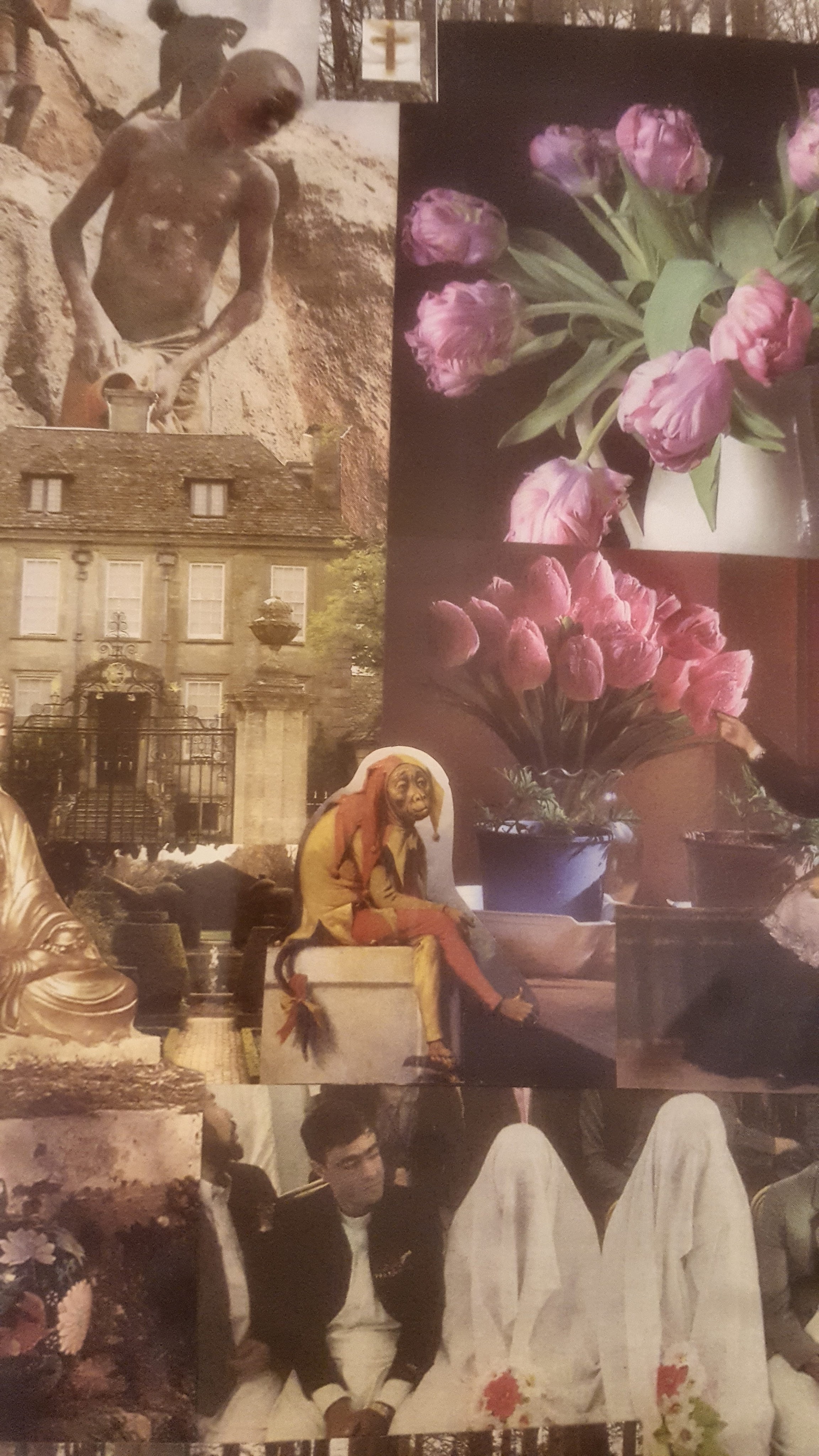
Miracles

Dear Oscar,

I was noticing how easy it is to breathe. I was thinking about it because in the midst of the pandemic which is currently gripping and affecting the entire planet, it is still easy to breathe. Easy to breathe even though we are constantly being told that air quality is deteriorating and that the lungs of the earth, the rain forests of the Amazon, are being decimated. My breath still flows, in and out, regulated, barely noticeable, expected, in spite of dire warnings that traffic pollution is choking our major cities, and that we as a race are susceptible to the blocking of our airways through allergic reaction, through infection and the dreaded virus of the pandemic itself. There is an ongoing and ever increasing narrative which seems to threaten even this most basic of requirements – the fear that we have created a planet where it will no longer be possible to breathe, and that that will be our collective demise. I wonder why it is that we have to subject ourselves to such a level of fear?

Of course I am also quick to acknowledge that if any one of us does suffer any form of breathing difficulties then of course measures need to be taken to protect us. It is self evident that the most basic of life forming activities have to be safeguarded above all else, and that should any of the threats that are so meticulously detailed come to have actual impact, then we as a collective, as a human race, need to eradicate them. But still I am left wondering why it is that these threats, generating abject fear in very many subjects, have to be the grand narrative trope of our age. We are poisoning and choking ourselves, or so the story goes, and no matter what efforts we put in place to try to counter this, the creeping certitude of annihilation is everywhere apparent. This is the undercurrent of out age, the subtext, as if we as a race will bring it upon ourselves because we know no better, because we are sinners, because we give in to greed and lust and all seven of the seven deadly sins. Because we are stupid children who require nothing but self satisfaction, a kind of self-pleasuring and self indulgence, no matter what the consequences for those around us or for the world itself. Oscar, dear, I just do not buy it.

Yes I know that I am compromised, that I am co-opted into ways of being that I might come to question, that I take flights, and drive a car, eat some mass produced foodstuffs, drop a piece of litter once in a blue moon, but I cannot recognise myself as the arch villain out to destroy the planet. I am conscious and aware and do my best, as do most human subjects, to avoid the sorts of consequences with which I am being threatened. And if I do not understand all of those threats, because the big businesses and corporate giants, the state monopolies and intensive farming techniques, keep me ignorant, despite my enquiring mind, then all I can do is all that I do.

I know that your world was not encountering this, not to the same degree. But you were classified as a sinner by your society, to both a greater and a lesser extent, and you were branded by your world, and made to live out a life ever conscious of the sins you had supposedly committed, and I just have a suspicion that such tropes are endlessly repeated, if differently classified, just to keep us all controlled. You can do this, you cannot do that … we are feeling it all keenly at the moment.

Best wishes to you, as ever,

Your friend,

Algernon B. Duffoure.
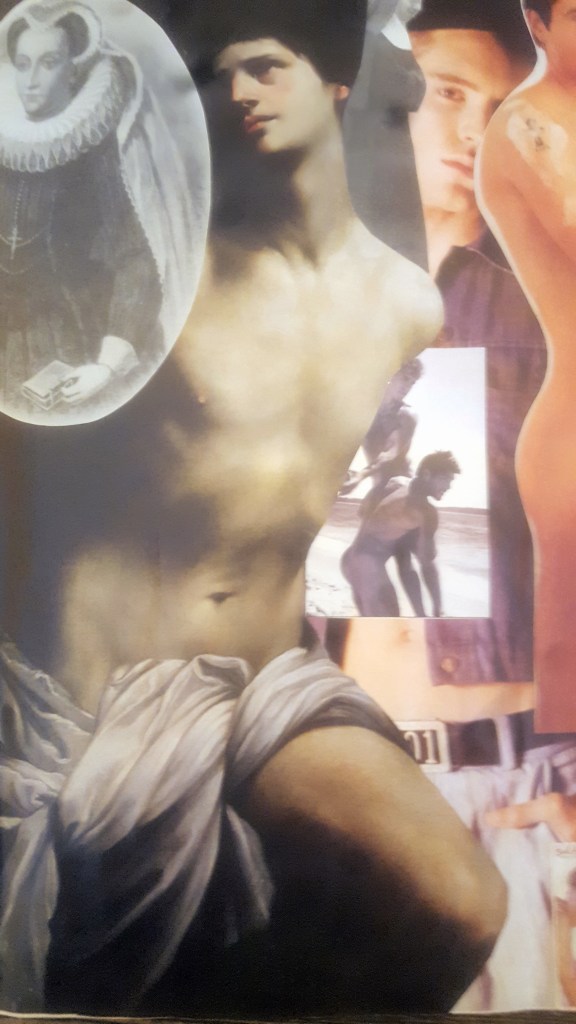
In the now …

Dear Oscar,

I wonder what happened to you when you received the missive from Queensberry, Lord Alfred’s father, calling you a ‘sondomite’ (sic). I suspect that you flew into an over-emotional rage, or maybe you rolled your eyes in a world-weary way, or guffawed at his poor understanding of the English language, or felt superior, probably that above all, felt superior to his brutish ways with your over-developed sense of aesthetic propriety. It must also have been very strange, in that moment, to be confronted with some level of truth, if truth it were, that you were a ‘sondomite’ (sic). It must have been disconcerting in the back of your mind, thinking over the many conquests that you had enjoyed, the interplay with the ‘street-arabs’, the establishments through which you had prowled in your search for the ‘panthers’. Even if in actuality you had never practised the art to which ‘sondomite’ (sic) refers, I am sure there was the ring of truth to the accusation – remember the ‘soiled sheets’ that were referenced by the chamber-maid at your trial, or did she lie? Was she paid to lie? That ring of truth must have smacked you hard, caught you sharp, made the very instant when you read the word – ‘sondomite’ (sic) – one that chimed sonorously something of a death knell in your mind, a reverberation that has never left you through history.

I am concentrating upon it, Oscar dear, not because I wish to torture you in any way, not because I wish to bring up the most painful of memories for you (and I am sure this was not the most painful), but because I am interested in what we all do when moments occur that rattle our being, shake us to the core, make us stop and stand still, and start to think things through. My suspicion, as I say, is that you reacted in an over-dramatic way to the accusation, whether or not that was made manifest in your behaviour or outlook; I suspect that inwardly you ‘flipped’. This of course jeopardised the next few moments, and then put into question your reactions as they ensued, as it must for all of us, when we are shocked, when we are caught up short. Those ripples of after-effect come to condition to no small degree all that happens next, but only moment by moment, each second unfolding, becoming something in itself, building up the slow minutes, and then the passage of time, and then those little ripples swell to be a tsunami. It puts into our own hands a huge amount of power, as orchestrators, as directors, as the ones who are in change of fate as it unfolds, the future as it is made known, destiny. There is probably a time for the over-dramatic, for the flying off the handle and taking sudden control, but is it a time linked to high emotion, linked so inextricably to fear, making of each act, each singular response, something of a portent? My dawning understanding is that in those moments our actions may well be ill-judged, and not fully formed, and not take into account all of the many influences and variables that might come to take effect. For you, Oscar dear, with your wounded pride, and your public reputation to defend, and the investments of those who were close to you, those who were benefiting from your wealth and your celebrity, it was the precursor of a now infamous doom. Or so the narrative goes. That is the story that is told. It may be true, it may only be an interpretation. It may be myth. What we know however is that you were carted off to a prison cell, that you did undergo what was known as ‘hard labour’, and that your career was left in tatters. Rightly or wrongly, justly or unjustly, that bears the ring of truth.

My own interpretation is that you did not remain steady, and that your ego came to the fore, and that you played a greater part in your downfall than might at first be acknowledged, that in effect you were not only a victim of the age, but an architect of it. Now I know that you were given few choices, that as the net tightened around you there were fewer and fewer outcomes possible that might have brought to you a different fate, but I cannot help thinking that choices are always present, no matter the circumstance, and that therefore different conclusions can be reached. You may not have come to be a symbol of your age, nor a touchstone for liberatory potential, but you could have been a happier man. It is a question, is it not: to put yourself on the cross to be crucified, or to live on?

I am presented with my moments, moment by moment, the now, and now, and now. The lessons to be learned from your example reach deeply, and take me into contemplation, and make my choices ever manifest …

Your friend,

Algernon B. Duffoure.

Levels of Irritation

Dear Oscar,

The wind is blowing today. I expect you listened to the wind from inside your cell, as well as witnessing it in all its fury within society. I find it is beginning to irritate me.

It is irritating me not because there is anything particularly unusual about it, not because it is a more terrifying wind than there has ever been, and not because it is destructive, or incessant, or creeping in between the gaps of the buildings I inhabit; it is irritating because I am allowing it to be.

I think of nagging children who pester and cajole, but who of course give up entirely if one does not accede to them; of pet dogs who want to be stroked, to be played with, to be the centre of attention, but who slope off to sleep if one does not participate, waiting at the sidelines until one is ready for them. I think also of my amounts of money, that flow in and out of my life, of the anxiety that accompanies them. When there is much, I worry about the amount disappearing, and when there is little, I worry that I will not have enough; all absurd, pointless and absurd.

Like you Oscar, as is evidenced in the works that you left behind, there are very many things that irritate me, and I have to acknowledge that I am very easily irritated. The banalities of a class system which oppresses not only those who are oppressed but also the oppressors, who have to conform to set standards, who live in shabby gilded cages, working within the narrow confines of their pretended respectability. The denial of natural love, of all the many loves that have dared not speak their names, the ways of being between peoples that are gentle, and friendly, and giving, the loves that radiate in small scope from those at the touchline watching the absurdities of action. All of the mothers, all of the siblings, all of the quietly watchful, holding hands and caressing, putting their loved ones to bed with kisses across the eyelids; the many loves that are not sensationalised, and which continue, beneath the surface, barely acknowledged. Even those that involve desire, regulated, careful and caring, a man with his arms around the shoulders of his closer than close buddy, and a young woman kissing her girlfriend goodbye.

It just seems to me, Oscar dear, that irritations are largely invented, and allowed to fester, and if they are truly real they can be addressed. But if they are the buzzing of the bees, the singing of the birds, the crashing of the waves, the howling of the winds, the touches of a friend, the embraces of a lover – then they do not need to be any more than you and I, and we and they, allow them to be.

Your friend, as ever,

Algernon B. Duffoure.

Change

Dear Oscar,

I have been thinking a lot about change.

I get the impression that despite the absolute censure of the society around you, your imprisonment, your public castigation, your personal degradation, you did not change so very much. I think you believed that you were right in what you thought, and that your actions, however they may have been interpreted, were just. I am sure that you thought that the world around you was wrong, and that you were right.

We all do. We all hold on to fundamental beliefs that we have been conditioned to accept, or that our personal circumstances have drawn us towards, or that our society dictates. The vast majority of us tend to accede to the dominant sets of opinions, to go with the flow, not to question in any fundamental way what we have been taught and what we have learned, in the very broadest of senses. It has made me think that we hold on to belief systems that are the dominant order, even when they are doing us no good, even when they are set against our growth, our potential, our reaching of our zenith. So, if we were citizens of Ancient Rome, we would believe that slavery was acceptable, needed, simply the norm; we would ‘go to the games’ and expect to see bloodshed, to witness death, a pantomime of murder played out before us. If we were eunuchs at the court of Imperial China we would accept that our manhood was removed, that our opportunities to procreate would disappear altogether, that our lives would be about administrative service. If we did not accept these things then we would be cast out from these societies. In the England of the nineteenth century you, dear Oscar, had to accept that your behaviour with the ‘rentboys’ was seen as scandalous, was unacceptable to the world in which you moved so easily, was the ruination of your reputation, your career, your liberty. Whether these things are ‘right’ or ‘wrong’ is only the decision of the age; if they are deemed ‘wrong’ then there is a price to pay.

This has made me reflect upon change that is personal, the decision to alter one’s diet, to give up a bad habit, to shift one’s perspective. It seems to me that this is so very difficult because there is a deep-rooted fear that change itself will bring uncertainty, and uncertainty throws into chaos the long-held beliefs that make up a being. If I believe that being a ‘good’ person means that I will be rewarded, or can reward myself, with sugary treats, then I am actually doing myself a disservice as I ‘pile on the pounds’, compromise myself with the possibility of diabetes, put my heart under strain; when that is the dominant belief then rewarding oneself with an apple or an orange seems to go against the grain, take away the very belief that I may see myself as ‘good’. To give up smoking cigarettes when one sees oneself as the contemplative coffee shop visitor, veiled and wreathed with foul scented smoke, thinking through, with crossed brow, one’s place in the world; when one is the professional cook, ladling on cream, slapping around pounds of butter, producing celebratory cakes (because there is no celebration without a cake). It makes my head hurt, Oscar, even to start to think about it all.

You see, Oscar, I see very clearly my faults, as I am sure you did too; it is whether I actually want to do anything about them, to change the essence of my being, that becomes the central question.

I will let you know,

Your friend,

Algernon B. Duffoure.
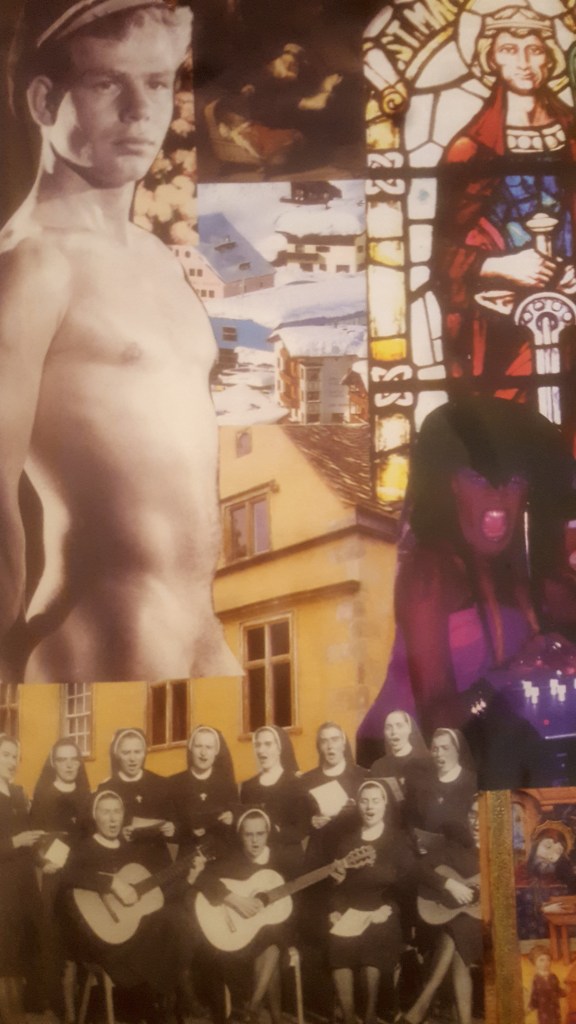
Child poverty

Dear Oscar,

You may prefer not to receive this letter – maybe none of my letters are actually welcome, but there does seem to be some sort of impetus behind my continuing to write them, so I shall not as yet desist.

I think you had ‘urchins’ in your day, or ‘street-arabs’, or ‘ragamuffins’ – the poor, very poor children out on the streets with nowhere safe to go, who had empty bellies and who were ripe for the worst imaginable forms of exploitation. I get the impression that they were commonplace in your society, that the chattering classes both noticed and did not notice their existence. You did refer to them, often in the context of available youths, who could be bought and sold for the price of a meal.

In our modern era we look back upon that time as if it is very distant from us, almost through ‘rose-tinted spectacles’, with the likes of Charles Dickens fleshing out for us the plight of the poor, in melodramatic terms, terms that evoke an emotional rather than any form of practical response. It is almost as if they have to be there in order to make the picture complete – of an unjust society, one where people suffered just because of where they were born, at what level in society – and we congratulate ourselves upon our own democratic movements that more equally divide the spoils of economic growth.

And yet there is still child poverty.

It sort of amazes me that this is true, and that across the globe there are children who are not given enough to eat, because conflicts rage around them, because political movements suppress and oppress them, because there simply is not enough in certain areas. It seems crazy that this is the case. That there is anywhere where there is not enough food. Somebody once told me that if all the wealth of the world was distributed equally amongst the world’s population, then everyone would be poor, but then I wonder what ‘poor’ actually means, how you measure it and rationalise it, and why it is that some have so much more than enough, while others do not have food. Surely as humankind we would think that food was an absolute priority for all the peoples of the world, just as a starting point, as something we could build from, as a human race. But it is not the case, and is very difficult to understand, that we who have food on our plates (and cars, and holidays, and clothes, and pets, and homes, and jewellery, and laptops, and mobile phones) can tolerate the fact that somewhere else there are children who are hungry.

Now, of course Oscar, I acknowledge that it is not ‘our’ fault, that the race as a whole may think one thing, but that those who hold and wield power may require something entirely different; even that a sense of superiority cannot exist unless someone else is being oppressed and held underfoot; that incorporating everyone seems like a ‘pipedream’.

But, if only …..

Your friend,

Algernon B. Duffoure.

Super privileged

Dear Oscar,

I went for a little jaunt this afternoon – just a walk to the main park in Chortleton Spa, and I bought myself a coffee and sat watching the world go by for half an hour. I was watching – but not listening to – the superprivileged.

I was not listening because I did not have to; I could tell from a distance that this foursome – two men, two women – two couples, no less – were lost in a world of carping and criticising, both on a microscopic scale and also in epic proportions. The coffee they had bought was not strong enough, and the wooden spoons seemed like a ludicrous concession to the ‘green’ agenda, and the park was well kept – but by volunteers, so it was said, and the government had got it all wrong, about everything, and leaders could not lead, and rulers could not rule, and the planet was in danger and the cosmos was about to implode.

I could hear it all without listening to a word.

I thought to myself: how comfortable do your lives have to be before you will just shut up for a moment and look at the beauty of the falling leaves, red, orange, yellow and gold, as you pat your full bellies, contemplating the delights of your supper to come, wandering back to your new cars for the journey to dog-ville, and spoiled teenage children, and plans for a winter vacation.

They were compromising their health with chocolate bars, the women with their rather weak caffeine fix, and the men with pints of alcohol foaming before them, indulging, endlessly indulging. I noticed that the women led the conversation – which was an animated conversation, one where things were being discussed, tales were being relayed, and that every now and again one of the men would intervene with some witty side-comment, or some joke, or some ribald observation.

They would laugh.

How they would laugh.

The super-privileged.

Best wishes to you, Oscar dear – such people need your needle-sharp lampooning!

Your friend,

(…and I hope you appreciate that there was a time where very, very few people would have admitted to being ‘your friend’),

Algernon B. Duffoure.

Writer’s Block

Dear Oscar,

I wonder if I am suffering from ‘writer’s block’, or if I am just lazy.

You see, even though I know you depend on these letters coming through, that you want to be remembered to the world at large, that there is the danger that you will be lost to history, that your significance will be eclipsed, I still only think of myself and whether I can be bothered to write anything at all – let alone a missive to you!

There is something so very over-indulgent about suffering from any sort of ‘block’; the inappropriate inability to do something that one does want to do, but which one denies oneself in order to whip up some sort of self persecution, contribute to the fear of failure, and just be thoroughly self centred. It is the ‘I cannot be bothered’ that is the most worrying thing, because it is like a self-denial, as if what I might have to say is not worth anything even to myself. Too much time is spent dealing with the realities of a silencing ethos that is culturally and morally generated, without adding to it myself!

And of course I do not take account of the fact that I am very, very lucky to have open to me the means of expression that allow me to say whatever I want to say; although that said, there are strictures in every culture, boundaries that one cannot cross without inviting reproach. I can however express this version of myself, be true to some notion of who I think I am, and make known across this platform my observations, thoughts, commentary. It is certainly not true everywhere. There are places across the globe in this the twenty-first century where certain words and certain phrases will get the author into a lot of bother, where neighbourhoods will erupt in condemnation, where lives are sanctioned, restricted, or even curtailed. I know there are many people across the globe who may be interested to read these letters along with you, Oscar dear, but they are afraid to ‘click the link’, because they would then be revealing something about themselves that their society, their family, their belief-system, would utterly condemn.

That is a real ‘writer’s block’; when one might know what one has to say, but is not allowed to say it.

You skirted issues yourself, Oscar, although there may not have been the vocabulary to address those obsessions of yours that got you caught by public disgrace.

I do not know; but mealy-mouthed and petulant refusals to send these short letters to you seems more to do with an abject sloth than a mental deficiency known as a ‘writer’s block’.

Makes me laugh!

Your friend,

Algernon B. Duffoure.

Picture this

Dear Oscar,

A picture for you, dear, just a picture to while away a few idle moments.

I know that in that terrible cell you were deprived even of visual stimuli, and so I celebrate your being – and our being, Oscar, dear – with a picture to set you thinking.

There is not much to report: the world is still coronacrazy and lost in the pandemic; my diet is going well and I am growing slimmer than I have been for many a year; diversions are few and far between – a coffee with a friend, cooking some chutney, catching up with soap operas. I know all of this will mean very little to you – so very different from the life you led – with your absinthe, hashish, and opiates.

You may be interested to know that all public theatres are now closed, because people cannot be in contact with each other, and the proximity of theatre seats therefore makes it impossible for people to attend. So now your only hope for immediate existence is mediated via television or radio – instruments that relay into the home your art and artifice. No more applauding crowds, no more speeches from the balcony; I am afraid such venues are at present permanently dark.

‘The Importance Of Being …..’ – I suppose people might start to forget!

Best wishes to you, Oscar,

Algernon B. Duffoure.

Hangover!

Dear Oscar,

Tell me, please, why it is that it is something of a learned human ‘nature’ to celebrate life in all of its rewards and plenitudes by overindulging in food and drink! I just do not understand it. Why is it that any form of celebration – even the celebration of the everyday going particularly well – has to be capped off with feasts and wine, and spirits and strong coffees, with sweetmeats and treats, all of which do more harm than good!

It seems to me that it is learned behaviour, but it is a very strange one. So, I am in a very good mood, and I have achieved whatever it is that I have achieved, maybe a trip out went well, maybe everything fell into place the way that I wanted it to, and so I decide I am going to treat myself, to round off a good day by spoiling myself. And there of course is the rub. It is literally spoiling myself!

Now I am not someone who is ridiculously over indulgent, as you well know. I will accept an alcoholic drink or two, I will partake of a bottle of wine, I will order a fairly extravagant meal in a restaurant, maybe a dessert, maybe some cheese and biscuits; but these occasions are actually few and far between, and in the current health dilemma that dominates all social interaction (see my earlier note to you entitled: Pandemic!), there is precious little opportunity to go out and make merry. So, like most of the populations of the world, any momentary celebrations have to be practised in the home. You well know from me, Oscar, that my home environment is singular, that I live alone, have occasional visitors, but that most of my time is spent on my own in my comfortable surroundings, and therefore able to indulge my tastes for celebratory meals at the drop of a hat! And I do so maybe once every week, perhaps once every ten days or so. And every time there is the same result, to a greater or lesser degree, of a hangover that forces me to waste much of the ensuing day in recovery, nursing myself through the stomach pains, and the headaches, and the inability to eat properly. I do not even really enjoy the celebration when it is happening! Yes, I must like the moment when the alcohol takes effect, when I feel excited and happy, laughing at life as it presents itself around me, but I always then go too far, have to be rid of the wine, and all of the food, and so devour and drink it all, go to bed not really aware of what I am doing, and sleep a very heavy sleep, to be awoken early with a chronic dehydration and the sensation that my body is in rebellion. And – one more and – I have been doing this for years, perhaps all my entire adult life!

It is socially acceptable, and in certain circumstances even required. I have been at important occasions where to refuse a drink, a toast to whatever, is frowned upon, and I have been with people who insist that they will buy you a drink, that you will drink it with them, whether you want it or not. I have had ‘fun’, shared happy times, tried new things, new beverages, new foodstuffs around the world, and not really taken account of the cumulative harm that I am doing to myself. You must know what I mean, Oscar dear, you were a gourmand and an imbiber with expensive tastes which you also indulged, and which you shared willy-nilly.

Well, nowadays I find myself saying every single time – it has to stop!

I have fairly recently conquered the excesses of my diet, and I intend also to limit to an absolute zero my intake of alcoholic beverages. You note I say ‘intend’, which leaves a certain wavering point, but I shall take things, as all the self help programmes dictate, one day at a time!

I have a suspicion that you never stopped at all – that you carried on with your indulgences until your very end, with only the enforced respite of imprisonment interrupting you. I get the impression that you had a sense of yourself as if you needed no improvement, despite the condemnation of your age, despite the wagging finger of censure. I suppose you felt you knew best.

I know best.

It has to stop.

Best wishes to you,

Algernon B. Duffoure.