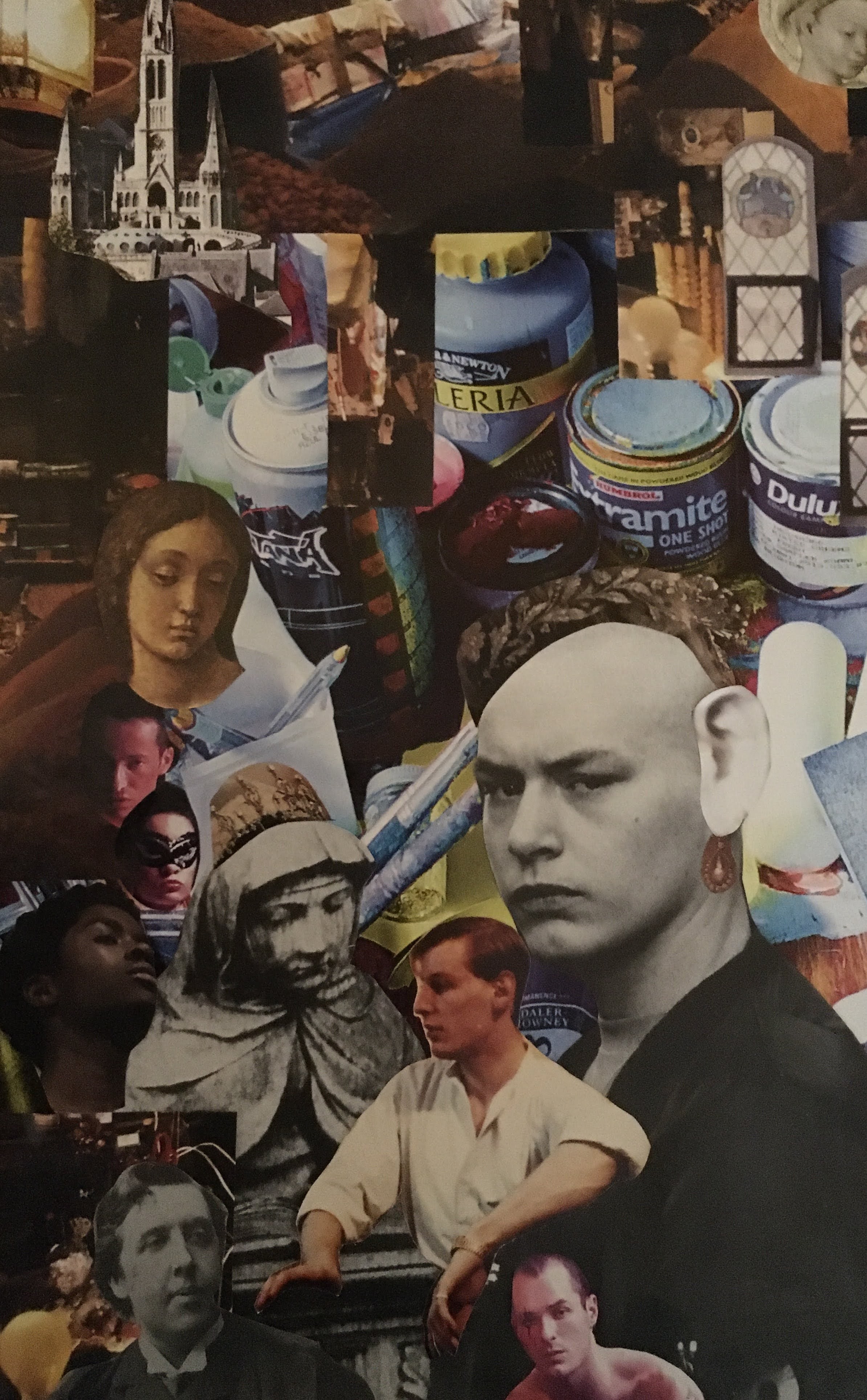
The heterosexual matrix

Dear Oscar,

You were caught within the heterosexual matrix so prevalent in your age, with your marriage to Constance, your fathering of two children, your position in the world as a man about town earning a good living and succeeding in your chosen career. We all now know that this was a sham, or only a part-truth, and that the impositions of such a matrix were not at all appropriate for your actual proclivities. So of course this does raise a question about your being heterosexual, and I think quite equally it also raises a question about your being exclusively homosexual. Maybe you were just greedy, a gourmand out to sate your pleasure principle no matter what the cost, with no thought to the social proprieties by which you appeared to live. I find the collapse of the dichotomous relationship between heterosexuality, with its overarching dominance, and homosexuality, endlessly subsumed and denied, quite fascinating; it seems to prove that neither polarity is near to the truth.

I have friends now, Oscar dear, who play within the heterosexual matrix and give in entirely to the proscriptions that surround them. It is for the women who are around me that I have a certain sympathy, because so many of them, despite the cause of feminism, seem to seek out the heterosexual ideal of the good, solid man, wage earning, dependable, on whom to rely. As a consequence they spend all of their time fulfilling versions of the feminine ideal, to whatever degree, and always to some extent allowing male dominance and decision making to hold sway. I listen to their voices, raised in alarm against many of the men who surround them, and see their lives unfolding within the strictures of the patriarchate, limiting their choices, stunting their growth, and catch myself noting that in very many cases they are playing along with the status quo – saying one thing and doing another. Not that I blame them – it is the power of the matrix to which they accede rather than any consciously personal perspective.

Very frustrating though. From the homosexual point of view, where so many of the structures imposed within the heterosexual matrix have already collapsed, and have to be mimicked in order to gain any validity within that separate sphere of being, there seems to be no escape. So long as we all play along ,the caravanserai simply progresses, always in essence the same.

Are there other ways of being, or do we already know the end of the story?

Your friend,

Algernon B. Duffoure.
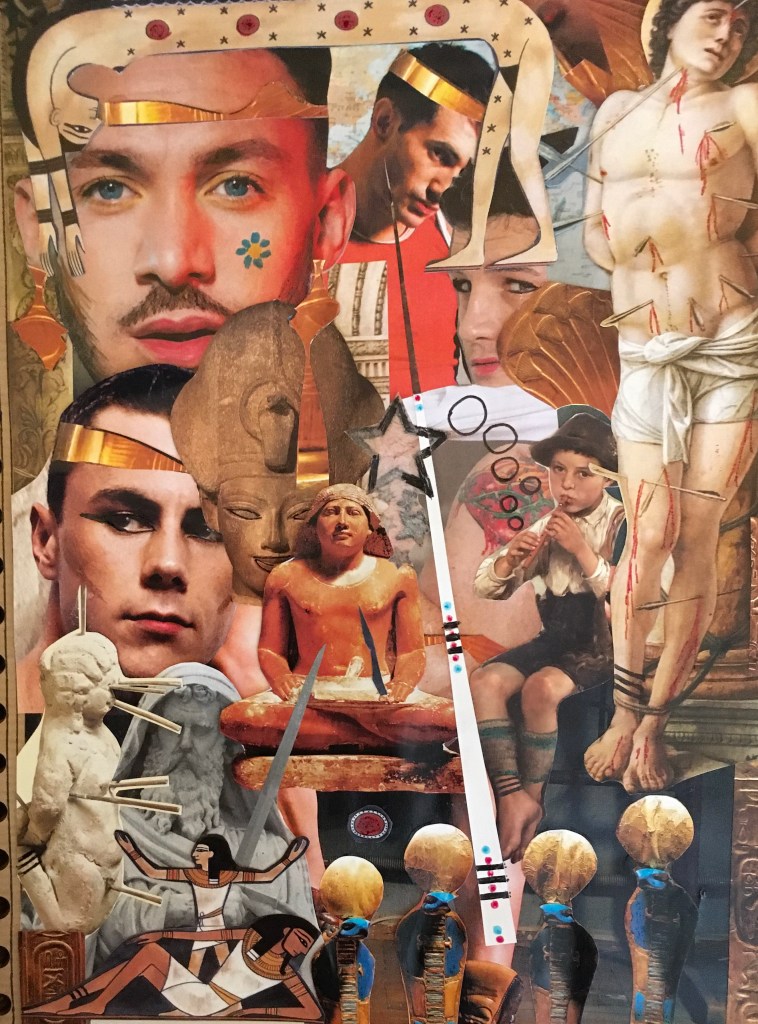
Great expectations

Dear Oscar,

I do not know if you were a fan of Charles Dickens, but his books in their serialised form would have been current to your own evolution. My suspicion is that, much as is the case with soap opera in our modern era, the supposedly educated classes would have looked down slightly on works that were popular, and so it would be no surprise to learn that a certain acerbic element of your wit would have been directed at this particular auteur.

In fact as a part of your legacy we have the quotation attributed to yourself that: “You would need a heart of stone not to laugh at the death of Little Nell”. I can imagine that the heightened realms of aestheticism would have had no truck with the melodrama of serialised story-lines, and that the belief that you saw Dickens as ‘overly sentimental’ would fit well with how you are yourself remembered. But you must admit that he was very popular, that his fame and success were undeniable, and that his impact has been far broader in its reach than your own.

All of its time, of course.

Philip ‘Pip’ Pirrip is a young lad of ‘great expectations’ in the novel ‘Great Expectations’ (1860), but all of those expectations are centred around himself. He will rise from a lowly state to a great one; he will become a ‘gentlemen’, and he will inherit a fortune, and he will marry the girl of his dreams, and despite his harsh upbringing and the suffering of his childhood, he will come to have all that he desires. In fact all of the ‘great expectations’ that are achieved by Philip ‘Pip’ Pirrip are entirely centred upon himself. He does little or nothing for the world that surrounds him.

Such a fantasised trope is still in evidence today, where lottery tickets are bought in the hope that a personalised realisation of dreams and aspirations can be reached, and where consumer goods are set in fairly easy reach in order to give the impression that individual lives are getting better. But I do wonder how people of today might word the ‘great expectations’ that might come from our age. I have a feeling that in very many cases they would not be centred upon self at all. In fact I have the impression that many, many subjects would rather see a peaceful and happy world, a calm and productive planet, acceptance and toleration between peoples, the subsuming of political and cultural difference, harmony, love. I think it is what future generations will look back upon and be thankful for in the days and ages to come.

Smiley face. Smiley face.

Best wishes, as always,

Algernon B. Duffoure.

Acceptance

Dear Oscar,

So I am doing my best to be accepting, and not place myself in opposition to others. There is a popular mantra in this day and age that we should learn to be more tolerant of each other, and more accepting of human foibles and peccadilloes. Of course I have made a very good start with you, because I try my utmost not to be judgemental of you and to accept the fact that you lived the life you lived, however it may have been interpreted at the time, and by history. All I can do in retrospect is simply keep lines of communication as open as possible. The aim is then to allow your preoccupations to remain under consideration, as indeed they undoubtedly are, all this time later. You started something, Oscar. You started trains of thought and investigations that have still not yet reached their conclusion, and unfortunately you were ended before you had a chance to bring any of your lines of enquiry to a well-considered ending themselves.

I am starting to wonder though just how far acceptance can go. If it is true and honest and open acceptance then it will have to also be willing to incorporate views that might be so counterpoised to one’s own sense of moral, social and cultural propriety, as to put it all in question. Do we have to, for instance, accept that there will always be a murderous element to human existence, as there always has been? Would it be possible to launch some sort of cross-societal and multi-cultural investigation into the causes and consequences of such behaviour and therefore to eradicate it? It does not have to be, and I think there is probably never a real justification for it. There is always some way in which such an act can be challenged and avoided. Does our sense of acceptance have to incorporate it because it keeps on happening, or perhaps should we be collectively working towards the point where what we accept is only the best of each other, which in itself would outlaw such negative behaviours? It cannot possibly be argued that a murder is the best that any individual can do. It must be argued that encouraging us away from behaviours that might lead to such an act would be the best that we can do.

There would be countless examples of challenging all that we tolerate, but may not wish to accept. Apart from crimes against each other there would also be the collective unacceptability of corporate agencies. Logging companies in the Amazon, petro-chemical companies pillaging world resources, over-fishing of the oceans, the denying of basic elements for life to swathes of the global population; I cannot help thinking that there is some awareness growing that such challenges need to be underway. That fills me with hope, Oscar dear.

As you do, Oscar. Whatever your failings may have been you have influenced a legacy of hope. Sometimes it is hard to see, but if we keep on expecting the best of ourselves I cannot see that anything other is possible. Working on, and thinking through, levels of acceptance may well be the dilemma with which we all have wrestled through time; I am sure you did.

Your friend,

Algernon B. Duffoure.

Pleasantries are possible

Dear Oscar,

In amongst all of the high drama of your being it must have been possible to be ordinary, just pleasant, open, accessible, passing the time of day in ways that were fruitful, interactive, with consideration. Or were you one of the those people who simply could not see others, was entirely indifferent to the needs of others, and who was simply not able to see the requirements of others because you were too besotted with the requirements of self.

I am sure you felt, for instance, that you were at several times completely in the sway of young Bosie, and constantly acceding to his demands, but I wonder whether you were giving him leeway because you wanted to keep him with you, and so of course were actually being self-serving even when supposedly being aware of someone else. I have noted it very often in human interaction – even my own, I have to admit; that we think we are being kind and supportive to another when in fact our primary consideration is bolstering the self. It is very rare indeed to see or hear of anything that is truly selfless, and I do wonder how possible it is, given that self-preservation is probably one of the primary instincts with which we as a race are blessed. What is more, it all seems so out of fashion nowadays.

The idea that one would sacrifice the self for some greater good or for the good of humanity as a whole, feels like something that might have been at some time or another, but really is not of the modern era. It is the stuff of a fantasy land – of knights in shining armour, or of Jesus on the cross and his host of self flagellants suffering for the good of us all. Does anyone do that sort of thing these days? Did they in your day, Oscar dear? Or is there always some kind of vainglorious association tied in with such pursuits?

You have yourself been cast in such a light; as if the suffering you underwent somehow had to be expected and endured in order to free future generations from the same sort of persecution. But I am afraid to report that it has not yet worked, not on a global scale (remember, Oscar, people on the planet today can still be put to death for homosexual acts in certain states), and is not even entirely achieved in the more liberal states (fingers still point, crimes are still committed, sexual minorities are still vilified even in the most free countries).

I think what I am arguing is that the price was very high for you to pay, and there is still a price attached, and so that notion of expectation and endurance continues; that of course minorities have to be positioned in ways to commit them to some form of suffering, because it is through their suffering that they are most generally known.

I just think it s possible that everything could be a lot simpler and a lot more pleasant; that acceptance could just mean acceptance. If I can have no expectations of others, and can accept them for who they are, whether that wavers, or is constant, whether it is true, or even false, then surely everyone can. I can assure you Oscar, there is nothing special about me.

Your friend,

Algernon B. Duffoure.

Equal

Dear Oscar,

I hope this letter finds you well.

My preoccupation is with a phrase that sprang to mind when I was preparing to write to you, which is:

We may be equal in our suffering but not in our success.

I do not know where the phrase came from, nor why it should come into my mind, other than that in seeing the levels of association I have with you made me think that my understanding of your suffering is because I too share it. No, I have not had the same experience as you, and not lived the same life, but there are elemental points of reference that would bring us close together. The classification system which makes of us ‘homosexual’, our shared origins in Western Europe, our racial inheritance, and our state of gendered being (as it is defined binarily). These become over-arching and definitional, at least in the ways in which the societies around us will wish to make us known. In effect it is how we will be reported, even though what we actually share is a sort of very common humanity, which we share at the root with everyone else. The systemic reference points by which we are known only come into being once others and their judgements, culturally governed, come into being. We might be able to look at each other simply as human entities, and it is at this point that I can share your heartache, your indignation, and your suffering. In essence it is the same as understanding anyone else.

But what I would not be able to share with you is the level of your success, which grew from privilege; it is the sort of privilege experienced by only a few. There are not so many people on the planet who have the sort of access to success that you had, who move in circles where the currency is self-promotion, and where works and sayings and the very presence of self are celebrated. You were a very fortunate individual. As you scan the full span of humanity and history you must be able to see that you were far more fortunate than most, and that it was advantage, of class, of rank, of consequent education and access to an intellectual marketplace which brought about your glittering career. In some strange effect it was not you. It was not actually you who made it all happen, but it did all happen because of the world that surrounded you.

It is odd to note that I can easily assimilate your pain, but not your glory.

With best wishes,

Algernon B. Duffoure.

My own best friend

Dear Oscar,

I wonder what sort of a friend you would have been to me, and what sort of a friend I would have been to you! I know there were those – Robbie Ross, for instance – who were devoted to you and endlessly supportive, but I fear I may have been the sort of person to be slightly wary of you, and not be particularly supportive of your worst crimes. I do not know, it is very hard to say because we are from different eras, and different social milieus.

I think I am a little judgemental, even to myself. If I were my own best friend I might well be quick to criticise, and also to condemn should I ever step out of line about anything. If I am ever speeding in my car, then there is always a voice in my head which slows me down, keeps me within the legal allowances, points out, as a friend and a confidant would, that there will be a heavy price to pay if I am found out, or if I cause any sort of accident. I am something of a sage counsellor, always thinking through the various ramifications of any course of action. I sometimes try the experiment though of being my own best friend, and of imagining what it would be like if I were looking at myself objectively, and could offer advice as only a friend can. Would I encourage myself to be more adventurous, to break the rules, to be more selfish and self-seeking? The position of the best friend may not always have in mind the best outcomes for the one who is befriended. In fact it might be argued that because it is something of an objective relationship, then the friend can project on to the other all of the possibilities that s/he is too averse to taking.

I think you would have ultimately been a caring friend, Oscar, someone who cared for the others who were in his life, as I must be to myself.

Best wishes, as ever,

Algernon B. Duffoure.

Frustration

Dear Oscar,

I hope this letter finds you well, even though I am writing from a selfishly frustrated position, and will as usual simply offload my own preoccupations and thoughts, rather than give any consideration to you. In my mind I am writing to you while you are in prison, but I should more realistically acknowledge that I am communicating with someone who is dead. But you see, Oscar, I cannot help wondering what that actually means.

In this day and age it is possible to see performances by long dead entities. I believe there is a stage show featuring Elvis Presley (1935-1977) with tickets that can be purchased today, put together through some form of hologrammatic digital re-mastering; similarly of Whitney Houston (1963-2012), and no doubt other famous names who have departed. It is also possible to hear your own voice, Oscar dear, in a recording made over a century ago, so that even though you are no longer with us we can hear what you sounded like, your pitch and cadence, your accent. What we seem to be preserving is an essence of a self, not of course, an actual self, not a thinking, reactive individual, but at least some form of acknowledgement to what actually was. It is this process of actualisation that interests me. If I am never to meet you, do I meet you when I hear your voice? I will never be able to question you, human to human, but do I need to? I know everything there is to know about you – certainly a lot more than you know of me. You see, Oscar, your heart may have stopped beating, but I wonder if you are dead.

The frustrations to which I do not allude are those of everyday life, the normalities of everyday life, which the dead no longer have to endure. Perhaps you are now dead because you no longer have to experience the frustrations of the living, that are not worth remembering, and not worth taking to one’s grave.

Best wishes, as always,

Algernon B. Duffoure.

A competition of priorities

Dear Oscar,

There are those who think that freedom is the absolute priority, freedom to say and do and be, and to some extent I understand the argument. But it also has to be recognised that absolute freedom would mean that people are free to undertake acts of atrocity, and I could not subscribe to that. So the question comes to be: freedom on whose terms?

I am sure you believed in your life time that you should have been free to lead the life that you wished to live, and there has now been over a century of civil unrest and political challenge throughout the world in order to try to achieve that. I suppose the attainment of such a level of freedom would have to ask the question as to whether these ‘freedoms’ were being won at the expense of others, and if that is not the case then all well and good.

But then again surely priorities should be far more basic, and commonly shared. Food, shelter, warmth, water; from such basics everything else can be built and developed. But it pains me to report, Oscar, that even in the advanced state of human evolution that we currently exist, there are still people who experience hunger, thirst, lack of protection against the elements. It is as if overlooking the plight of the weakest is somehow acceptable, with states, religions, charities, all looking the other way. Of course no single person can achieve enough to change it all, but so much of the collective consciousness seems to be about now knowing, not recognising, not responding. Preserve the self before you make any attempt to preserve the other – that appears to be the overriding philosophy. Again, I can understand the argument, but surely some awareness of the plight of others would benefit the whole.

I have travelled, Oscar, in the country of Vietnam, in the capital of Hanoi. What impressed me the most is that crossing the road was about simply stepping off the kerb, with awareness, with due care, and mingling with the hubbub. All traffic would give way to the weakest, so that pedestrians were given right of way, and motor vehicles would work around their needs. Just as cars would work around the needs of motorcyclists, and lorries of cars. It looked rather a chaotic system, but it seemed to work very effectively. What was most impressive, was that ‘giving way’, and understanding the needs of the weaker, were the order of the day. It seems to me that this could be translated in a much broader sense into our understanding of each other, and our recognition that selfish squandering is of little benefit to the whole.

Did you care, Oscar, for those who were weaker than you, less influential, less powerful, with no voice, no right to be heard, no social recognition? I think to some extent you came to, but only as you experienced levels of privation.

Best wishes,

Algernon B. Duffoure.

What we have

Dear Oscar,

I know that your incarceration will have been a very low point in your life, but it has crossed my mind that actually it served you well in unexpected ways. You did after all write the epic letter to Bosie, ‘De Profundis’, a great work which reverberates its truths through history, and you were inspired to compose the poem ‘The Ballad of Reading Gaol’, which similarly now holds an enviable position within the canon of world literature.

What is more, in the depths of such deprivation, you were thrown back on to yourself alone, with none of the stimuli of the world in which you had so eagerly moved, none of the distractions, the pretences, the dreamy romanticism. It is no doubt true to say that I have no idea of what it must have been like, and never can have, because such regimes are lost to us, altered through time, different in the ways they take their effect and have their impact. The world in so many ways is seemingly so different. Yet I cannot help thinking such a level of loss, of enforced denial, that the inability to sate the excessive appetites of success and celebrity, may in turn lead to some appreciation of what we all truly have, which is very little, which is only ourselves. I know that public censure must have been extremely hard to bear, but to recognise the nobility of the self even in the face of castigation, to see that the two lungs will breathe, the heart will beat, the senses remain, must have offered some little solace. It is all just making me appreciative of the fact that I have all of these things and also my liberty (such as it is in our modern era).

I am increasingly aware that my possession of health and well-being are the most powerful tools that I have in navigating my way through a life which is not uncomplicated, not un-beset by daily issues, by problems great and small that arise from time to time, by expectations and disappointments, by dashed hopes and broken promises. Thinking of you, Oscar dear, leads me to acknowledge that the most basic of advantages that all of us possess, just the breath that flows, the blood that pumps, is enough; everything else is ‘icing on the cake’.

I have a part to play in maintaining my health, my mental stability, my feelings of ease, my joie de vivre. I feel in some sense that I have a duty to myself, that I must expect of myself not an unwavering recognition of my needs, but always the ability to pick myself up should I fall, to set myself back on a familiar path should I digress, to keep on taking steps forward. I, like the majority of the earth’s inhabitants, the overwhelming majority, perhaps even, in some sense, everyone, can transcend, remind, imagine, reach. I am presented with choices at every juncture, and I have the ability to make choices that are of help to me and my world. It is, in so many ways, a glorious thing to be thrown back upon one’s own resources, to have to manufacture for oneself the road map leading back to some sense of salvation, of preservation.

I am happy.

I can continue to be happy.

Your friend,

Algernon B. Duffoure.

An alternative

Dear Oscar,

I hope this letter finds you well. I hope that your presence across the span of history is somehow at ease, and that you can view from your vantage point with compassion. After all, your own faults were more known to yourself than they were to anyone else, and that is true of all of us.

I have been writing to you recently about how slowly time advances, and how changes in opinions and social mores are even slower, but that if we wait long enough, and look back through aeons, there are indications that some elements of human evolution are to the benefit of man, and beast, and planet itself. Admittedly they seem few and far between, particularly as the worst possible elements of human interaction keep on reasserting themselves, even in the face of the best. I suppose one has to assume that it was ever thus – but I wonder if that need be the case?

Evolution seems to imply a state of being that is not one of stasis, that there is movement, that there is change, that alternatives come into being. I have been giving this much thought, as set in my ways as so many of us are; as you were, Oscar, even to the point of your own demise. Is the failed hero a real hero?

It seems to me that change comes also very, very slowly, and that in reality change comes in the smallest of moments, the tiniest of gestures, in those quick and fleeting seconds where one actually does do something that one did not do before. I think that it is in its insignificance that its actual significance lies. Taking an alternative route, a different course of action, and actually making a decision that is unlike decisions that have been made before, that would seem to me to indicate real change. It is as simple as choosing not to butter one’s toast in order to reduce one’s fat intake, and then repeating the action, day after day, until a ‘new normal’ comes into being. Not to put the cigarette to one’s lips; not to fill the glass of wine brimful; not to ignore the neighbour as they appear in their garden, but to say: “Hello”, and then to say: “Hello” again; not to put one’s cross into a familiar box on the ballot paper, just to move one’s hand, just before it happens, whatever the consequences may be imagined to be. Taking the alternative, with precision, or sometimes recklessly, and re-charting the course.

If you, dear Oscar, had not …. but then of course, you did.

Your friend,

Algernon B. Duffoure.