You undoubtedly could not see beyond your own sense of entitlement, your own pursuit of pleasure, and that is why you were unable to see how your lifestyle would impact upon the world around you. It is rather surprising, given that you were actually very astute at reading the mores of your day, as reflected in your writings; you could see very clearly that the world you inhabited was full of contradiction, was a place of secrets kept and secrets held and secrets sometimes made public in order to bring down others. I am sure that to some no small degree you actually participated in such activities, and that your ribald wit was ever ready to lampoon those whom you held in disrespect, or whom you saw as threatening your position of preeminence. I wonder if you have any regrets, Oscar, and suspect that your response would be that you have none. A strange blind spot, not seeing how things would unfold, when it was very obvious that the world was turning against you – and even you must have recognised that! I suppose this is why history has accorded to you the moniker of ‘victim’, of ‘martyr’, no less, as if the nomination of cultural sainthood somehow atones for the sins of your age – not your sins, but the sins of your age.
It is, as I have said before, much the same now. Now it is possible to get completely lost in the trivialities of the everyday, the pursuit of recognition, the need to make oneself important, the pursuit of endless diversion and the promise of unending pleasure, to satisfy the most basic of lusts and wants and perceived needs, and to miss entirely what is actually going on. In fact it is quite evident that such tactics can be used to hoodwink entire populations into regimes of control, where diktats are the order of the day, where the room for freedom of thought and freedom of expression are slowly eroded – because – we believe we can say what we want, but in actuality we are only saying what we are allowed to say! We live in an age of endless choice, but I have often thought to myself is there really any choice? Just because we can have a red car or a blue car does that mean that we can operate without a car at all? Is there really a choice, or are we all just slaves to whatever system is the order of the day? And if we are presented with real choices are we able to see them clearly, without our own stubbornness, our willfulness, standing in the way; or, more pointedly as is today’s experience, without the endless proliferation of ‘choices’, of ‘alternatives’, diverting us subtly, or not so subtly, away from any notion that real choice actually exists at all?
One would think, Oscar dear, with examples like your own to look back upon, that there would have been some sort of advance in thinking, but alas there is not. Oh, and I know that there is an argument that without your own ‘noble sacrifice’ there would have been no recognition of the plight of the homosexual, that the start of ‘gay liberation’ would not have occurred, and that there would still be persecution of sexual minorities, but really, is that valid? Is it the case that there have to be real levels of suffering before the world at large works out that persecution of anyone is not such a good idea? I am thinking of issues of race and religion, of caste systems, of slavery, of skin pigmentation, of difference however it may manifest itself. Does it really have to be that only after decades, centuries, lifetimes, millennia – that we as a human collective will realise that beating up on the other simply perpetuates the very suffering that in another breath we are all so adamantly against?
I leave you with that little poser, Oscar – from one poseur to another!
I get the impression that despite the absolute censure of the society around you, your imprisonment, your public castigation, your personal degradation, you did not change so very much. I think you believed that you were right in what you thought, and that your actions, however they may have been interpreted, were just. I am sure that you thought that the world around you was wrong, and that you were right.
We all do. We all hold on to fundamental beliefs that we have been conditioned to accept, or that our personal circumstances have drawn us towards, or that our society dictates. The vast majority of us tend to accede to the dominant sets of opinions, to go with the flow, not to question in any fundamental way what we have been taught and what we have learned, in the very broadest of senses. It has made me think that we hold on to belief systems that are the dominant order, even when they are doing us no good, even when they are set against our growth, our potential, our reaching of our zenith. So, if we were citizens of Ancient Rome, we would believe that slavery was acceptable, needed, simply the norm; we would ‘go to the games’ and expect to see bloodshed, to witness death, a pantomime of murder played out before us. If we were eunuchs at the court of Imperial China we would accept that our manhood was removed, that our opportunities to procreate would disappear altogether, that our lives would be about administrative service. If we did not accept these things then we would be cast out from these societies. In the England of the nineteenth century you, dear Oscar, had to accept that your behaviour with the ‘rentboys’ was seen as scandalous, was unacceptable to the world in which you moved so easily, was the ruination of your reputation, your career, your liberty. Whether these things are ‘right’ or ‘wrong’ is only the decision of the age; if they are deemed ‘wrong’ then there is a price to pay.
This has made me reflect upon change that is personal, the decision to alter one’s diet, to give up a bad habit, to shift one’s perspective. It seems to me that this is so very difficult because there is a deep-rooted fear that change itself will bring uncertainty, and uncertainty throws into chaos the long-held beliefs that make up a being. If I believe that being a ‘good’ person means that I will be rewarded, or can reward myself, with sugary treats, then I am actually doing myself a disservice as I ‘pile on the pounds’, compromise myself with the possibility of diabetes, put my heart under strain; when that is the dominant belief then rewarding oneself with an apple or an orange seems to go against the grain, take away the very belief that I may see myself as ‘good’. To give up smoking cigarettes when one sees oneself as the contemplative coffee shop visitor, veiled and wreathed with foul scented smoke, thinking through, with crossed brow, one’s place in the world; when one is the professional cook, ladling on cream, slapping around pounds of butter, producing celebratory cakes (because there is no celebration without a cake). It makes my head hurt, Oscar, even to start to think about it all.
You see, Oscar, I see very clearly my faults, as I am sure you did too; it is whether I actually want to do anything about them, to change the essence of my being, that becomes the central question.
I hope this letter finds you well; I hope that in the midst of your prison of misunderstanding you get some pleasure from the letters that I send to you. Thank you for taking the time to read them; I appreciate my voice being heard.
I was out walking, just taking some air, with no real purpose and no direction, just ambling along, looking around me, taking it all in. It struck me how much there is to take in. It struck me that I live within absolute abundance, and that everywhere there is the teeming and the multiplicity of humanity, with its impact on every horizon. That in itself made me appreciate all that humanity is able to do, without judgement, seeing the homes and the thoroughfares, the protections from the elements, shelters simple and elaborate, walkways and byways and mountain paths.
Of course we tread upon nature, the natural world, the world that grows and flourishes around us despite our every intervention. It struck me that though we tread on nature, nature very quickly treads back, filling our paths with its plants, finding all the nooks and the crevices where it can seed, multiplying endlessly. I noticed that no matter how I was feeling small trees would continue to bud and shed their almond shaped leaves, pale and yellowing in Autumn, green and piquant in Spring, and that blossoms would open, infusing the air with scent both strong and subtle. There would be wind and energy, flight and function all around me, whether I took the time to see it and to sense it or not. There would be so much of it going on that I would not be able to encompass fully its impact, not through sight, or touch, or smell – there would always be an endlessness from times I knew nothing about and into times I will not experience. A cold day, a warm day, just the vibrancy of it all whipping around me, caught in still tranquillity, lost in a windy squall.
I am, like you Oscar, beset by all the problems of the world, that weigh themselves upon my shoulders, that keep my head bowed and my vision small; just looking, without effort, just letting the world in, put all that away.
I wanted to send you a piece of writing – just to see what you think. It follows ….
Your friend,
Algernon B. Duffoure.
Billy (the Kid).
Thirteen (going on fourteen), with dribbles on his chin.
With cold snot falling (like honey) from his nose.
Which he wipes on the elasticated cuff of his jacket.
A jacket too big.
Because it is a man’s jacket which he stole from a bus shelter.
Sometime ago.
Seven p.m.
Seven p.m. and Billy is in position, with his hands thrust deep into his pockets, his shoulders hunched, his head bent, his right foot pressed flat against the wall behind him, his left leg extended to act as anchor.
Seven p.m. and the wind howls through the city streets.
‘Got any money, mister?’
… comes the call.
‘Got any money?’ (for a poor homeless kid. Hungry kid …. he thinks, but does not say).
With the wind beating mercilessly against him, which would have ruffled his untidy hair if it had not been clamped within a baseball cap, the peak turned to one side, making his face look skewiff (or was it his expression?)
Seven p.m. and the chimes of the great clock are lifted and borne throughout the metropolis, tolling the end of a working day, a workaday, an everyday.
Seven p.m. and the iron grilled door of the ‘Club Mon Ami’ swings open (next to Billy, to his right), like an arm extending in welcome, as if to curl and close around shoulders, as if to hold in an embrace, as if to lead on to the dancefloor and whirl into a waltz, a jive, a slick fandango.
And the music starts up
Slow moving music to fill the empty bar, to waft around the tables, to pervade the enclosed and steadily controlled atmosphere, to mix with the whirr of fan heaters and air conditioners, to start again the nightly interplay, the nightly interaction, the night of revelry and devilry to which ‘Mon Ami’ must bear witness.
Billy watches passers by, and calls to them as they pass by:
‘Got any money?’
Thirteen, with nowhere to go, not to a flat cramped and empty, and smelling of damp.
Where his mother sleeps by day.
Where his mother entertains by night.
Her cries like pain.
(She would not be there now, would not be there for hours, and were she there he would rather avoid her, would prefer not to be that part of her life hidden behind the dividing curtain, with eyes dark accustomed that can see through rents and tears those strange contortions, those frantic manipulations, those brazen bare assed thrusts and throes which bring in the daily bread. Grunts and groans and calculated moans (on cue) to soothe him into sleep.
Better the streets.
Better the city lights.
Better the hope for a hamburger, the craving for a ‘Coca Cola’, the meeting with friends, and the larking, the marauding, the troublemaking.
Better an adventure he did not know than tha monotonous predictability he knew too well, which smelt so warm and close, which sounded so wet and clammy and clam-like, which quickened his breathing along with their breathing, and caused him to masturbate guiltily.
Not old or wise enough to consider her plight.
Big Ben took up his position at the door to the Club, glanced at Billy, set his arms folded across his bulky chest, his legs slightly apart, his thick potato head square upon his shoulders, and imposed.
Right on the street.
Right next to Billy.
(He flicked a wrapped strip of chewing gum over to the kid, who caught it without a smile, slipped off its silver coating, devoured it with peppermint in his nostrils).
Passers by looked into Ben’s ugly face, then swung their head away, and walked away, and put their thoughts neatly away, into enveloped, filed and sealed storage, unwilling to know what they knew.
Those passers by who milled along the pavements of the street, bustling together, battling against the wind, dragging their problems behind them, like so many screaming children, like so many sacks of clay. People weighed down with problems. Problems imposed upon them.
(Problems (they have) imposed upon them(selves)).
Wandering this way and that way with their destinations fixed, or uncertain, or unknown, with their faces long and isolated, untouched by each other, faces with nobody’s cares but their own. They filled the length and breadth of this street, this long and curving street which wound through the heart of the city, a mighty river of cars and pedestrians, of bicycles and policemen, of articulated lorries and linking chains of tourists, a never-ending flow of activity, with its tributaries like arteries pulsing more life into it, from its shops and its ffices, from its bars and its locales, both its daytime and its nighttime caught between, within the buildings, surging along the roadway with the stale air of congestion and the dim light of dusk.
‘Got any money, mister?’
‘Yes’, (said the thin man, the thin man hurrying by, brushing by).
‘Give us some’.
‘No. Why don’t you get off home?’ (said the thin man, looking away, anywhere away).
‘Need some money for me bus fare, don’t I?’
‘Really?’ (said the thin man, stopping to look not at the boy, but at the man near him).
Scan the form of Big Ben (the biggest Ben), his crumpled suit with stretched stitching, his cauliflower ears, his eyes within their creased up sockets, bloodshot, his lips curling, his teeth showing … (and see nothing, see him not, see the path being trodden to lead YOU away).
Billy looks after the thin man, the sleek man, the groomed man, with his manicured nails gleaming clear nail varnish, with his fingers tugging at a flap of dry skin on his upper lip, with his vague and distant air, his unreal, other-worldly air, and spits after him.
The sound makes the man look back and see phlegm land.
He sidles on.
( … and he persuades himself, with rational thought, that sooner or later the kid, that obscene and objectionable street kid, that urchin, will wend his way back to calm respectability, and will be put to bed between crisp cotton sheets, and will be kissed goodnight, and will sleep, with sweet dreams).
Billy, the Kid, with his fly half undone, gaping with Superman’s underpants.
Billy looks around him for his next victim.
… like flies to a running sore, they come, and they go, and he jingles coins in his pocket.
Big Ben grunts his approval.
This haunt, this favourite haunt of young Billy, sheltered beneath the overhanging office blocks (which surge giantesque into the night sky, cool and rigid phalli), with the Club to his right, ‘Mon Ami’ to his right, with a corner to his left, whither he may scamper should the police decide to swoop.
(Policemen who knew he was there but who turned the other cheek, on the whole, like Christians, on the whole.)
And the waste ground behind the concrete pristine facade, where derelict small houses offer themselves for exploration, where tramps congregate and burn their litter fires, where couples court (where prostitutes take their clients and boys wait), men in the throes of their ecstasy too preoccupied to watch their wallets or their cameras or their coats or their hats (or their trousers, sniggered Billy to himself, Ben catching the snigger and watching him, watching the gleam in the gleeful eye, the memory burst like a firework, a memory of a man in socks and an erection screaming blue murder after Billy), and women with their handbags ripe for the pucking, like prize plums, fat with cash, unless they wore the garish make-up of the pro and kept their bags firmly slung around their wrists, as his mother always did, her mind on the money.
Men walk in.
Leather shining and mustachios bristling.
To the Club ‘Mon Ami’.
… voices enveloped by the pulse of the music …
… eyes alert to the dimming light …
Cut off.
In an instant.
From the world which turns its slow and even course around them, which carries on as if without them, which clocks on and clocks off with ageless repetition and does its best to disregard their secret enclave.
Not to know about them.
In the sanctity of the Club ‘Mon Ami’, small club, mon ami, tiny at the side of the thoroughfare, hidden in the folds of the city ( a city so vast that no vantage point can give a view of it in its entirety), they seat themselves at a table and wait for the night to progress.
The night which descends upon the street outside as if tugged by the unceasing winds.
The night which fares in street lamps, which crackles statically into life at the flick of a switch, at the flick of Big Ben’s wrist, who with one careless motion sets ablaze the pink neon sign above the door, the sign which heralds the promise ‘Mon Ami’, ‘Mon Ami’ large and penetrant upon the horizon, ‘Mon Ami’ glaring down to the people, to all of the people, below.
Which bathes the boy’s face in a pink flush.
Billy with the tender pink tinged flesh of fresh meat.
… mon ami.
He waits around here often (if not always he, then someone like him) waits for the other kids whom he knows will come and join him, waits for the men, amongst the swaggering men (with socks down their trousers), those with their collars turned high, looking furtive, glancing from side to side before they enter the Club, who can be stopped, regaled, who can be forced to part with some cash on the words (spoken or intended):
‘Don’t worry mister, your secret’s safe with me’.
Billy the source of this (and much more) knowledge.
Billy the Clever Dick.
Standing in the evening air watching the world go by.
Staring blankly.
At the people who cannot approach.
Those with rolled newspapers and rolled umbrellas and coats buttoned close and snug.
Those who do not see him but who walk with their heads in the clouds convincing themselves that all is right with the world.
(And if they did chance to glance his way then he would poke out his pointed and curling tongue, or hold aloft two fingers, and they would glance to the floor, would pretend not to notice him, that he was not their concern, not their problem – like the people on the underground whom he would stare at unflinchingly, his gaze determinedly unswerving, who would hide behind magazines, or watch their reflections in the window, or would busy themselves reading advertisements displayed above his head, intent upon denying his existence).
When Billy grows up he wants to be the Invisible Man.
Winning adherence to any set of convictions is difficult to achieve, particularly if the desire is to sway public opinion away from the norm. The norm of course becomes the dominant form, and this whether or not it is the best or most effective way of achieving harmony in relations between all subjects. Skewed of course and always subservient to the will of controlling forces.
Now it may well be that love between the nations and the peoples of the world is preferable to war, but if it is not promoted and exemplified then it is war that will win out. I am very sorry to say. Any level of influence to the alternative grows only very slowly and is dependent upon responses from the masses.
Love between actual individuals, love not influenced by gain and control, is even more difficult to achieve. Love between men that is love and not the need to dominate and control is a greater challenge still. When we are all wrestling with our demons.
Perhaps this is ‘the love that dare not speak its name’ – an actual concern and union with the other, until there is no separation of being.
Thank you for all your gifts, Oscar, not least your ability to provoke thought.
You may prefer not to receive this letter – maybe none of my letters are actually welcome, but there does seem to be some sort of impetus behind my continuing to write them, so I shall not as yet desist.
I think you had ‘urchins’ in your day, or ‘street-arabs’, or ‘ragamuffins’ – the poor, very poor children out on the streets with nowhere safe to go, who had empty bellies and who were ripe for the worst imaginable forms of exploitation. I get the impression that they were commonplace in your society, that the chattering classes both noticed and did not notice their existence. You did refer to them, often in the context of available youths, who could be bought and sold for the price of a meal.
In our modern era we look back upon that time as if it is very distant from us, almost through ‘rose-tinted spectacles’, with the likes of Charles Dickens fleshing out for us the plight of the poor, in melodramatic terms, terms that evoke an emotional rather than any form of practical response. It is almost as if they have to be there in order to make the picture complete – of an unjust society, one where people suffered just because of where they were born, at what level in society – and we congratulate ourselves upon our own democratic movements that more equally divide the spoils of economic growth.
And yet there is still child poverty.
It sort of amazes me that this is true, and that across the globe there are children who are not given enough to eat, because conflicts rage around them, because political movements suppress and oppress them, because there simply is not enough in certain areas. It seems crazy that this is the case. That there is anywhere where there is not enough food. Somebody once told me that if all the wealth of the world was distributed equally amongst the world’s population, then everyone would be poor, but then I wonder what ‘poor’ actually means, how you measure it and rationalise it, and why it is that some have so much more than enough, while others do not have food. Surely as humankind we would think that food was an absolute priority for all the peoples of the world, just as a starting point, as something we could build from, as a human race. But it is not the case, and is very difficult to understand, that we who have food on our plates (and cars, and holidays, and clothes, and pets, and homes, and jewellery, and laptops, and mobile phones) can tolerate the fact that somewhere else there are children who are hungry.
Now, of course Oscar, I acknowledge that it is not ‘our’ fault, that the race as a whole may think one thing, but that those who hold and wield power may require something entirely different; even that a sense of superiority cannot exist unless someone else is being oppressed and held underfoot; that incorporating everyone seems like a ‘pipedream’.
I went for a little jaunt this afternoon – just a walk to the main park in Chortleton Spa, and I bought myself a coffee and sat watching the world go by for half an hour. I was watching – but not listening to – the superprivileged.
I was not listening because I did not have to; I could tell from a distance that this foursome – two men, two women – two couples, no less – were lost in a world of carping and criticising, both on a microscopic scale and also in epic proportions. The coffee they had bought was not strong enough, and the wooden spoons seemed like a ludicrous concession to the ‘green’ agenda, and the park was well kept – but by volunteers, so it was said, and the government had got it all wrong, about everything, and leaders could not lead, and rulers could not rule, and the planet was in danger and the cosmos was about to implode.
I could hear it all without listening to a word.
I thought to myself: how comfortable do your lives have to be before you will just shut up for a moment and look at the beauty of the falling leaves, red, orange, yellow and gold, as you pat your full bellies, contemplating the delights of your supper to come, wandering back to your new cars for the journey to dog-ville, and spoiled teenage children, and plans for a winter vacation.
They were compromising their health with chocolate bars, the women with their rather weak caffeine fix, and the men with pints of alcohol foaming before them, indulging, endlessly indulging. I noticed that the women led the conversation – which was an animated conversation, one where things were being discussed, tales were being relayed, and that every now and again one of the men would intervene with some witty side-comment, or some joke, or some ribald observation.
They would laugh.
How they would laugh.
The super-privileged.
Best wishes to you, Oscar dear – such people need your needle-sharp lampooning!
Your friend,
(…and I hope you appreciate that there was a time where very, very few people would have admitted to being ‘your friend’),
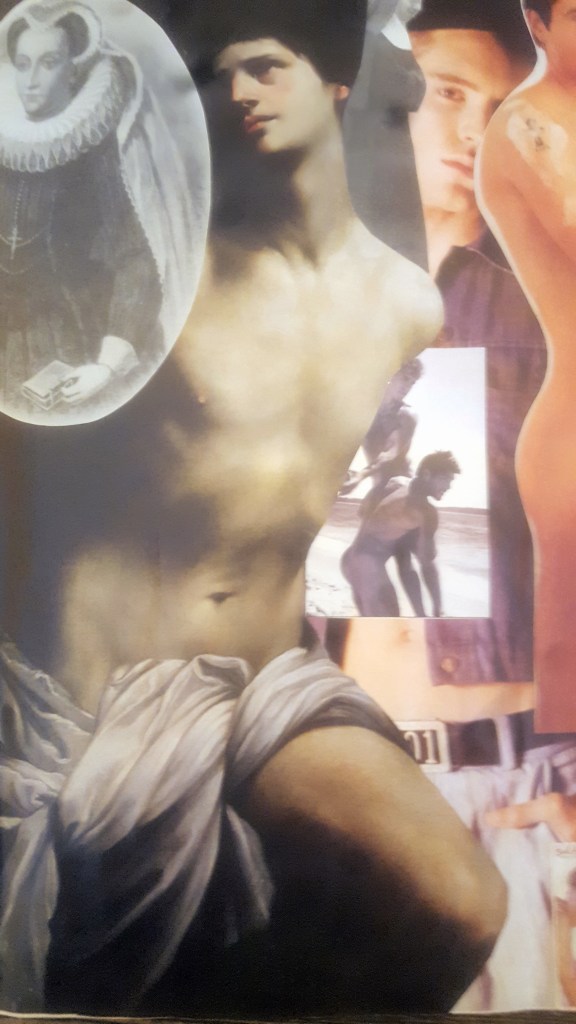
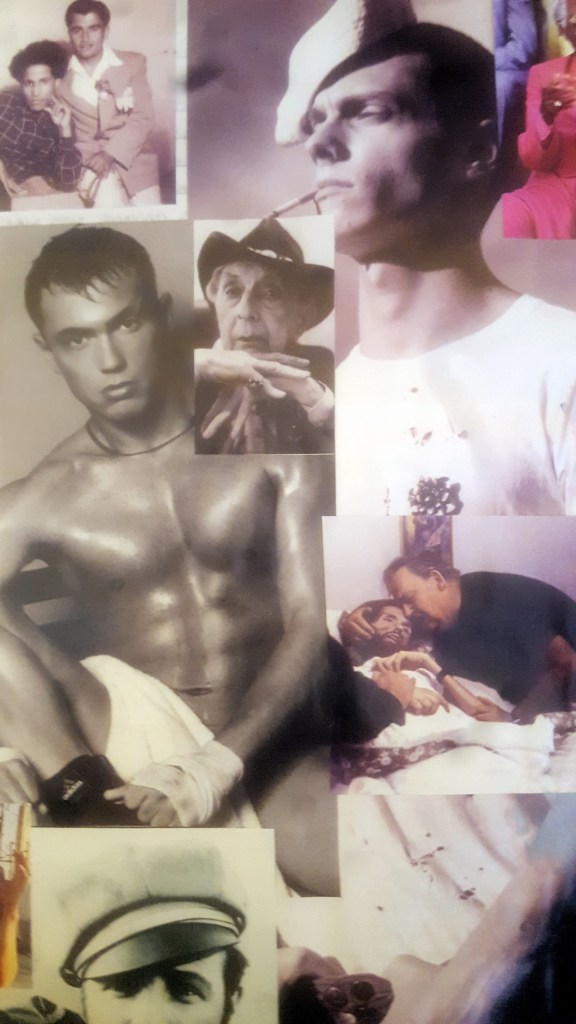
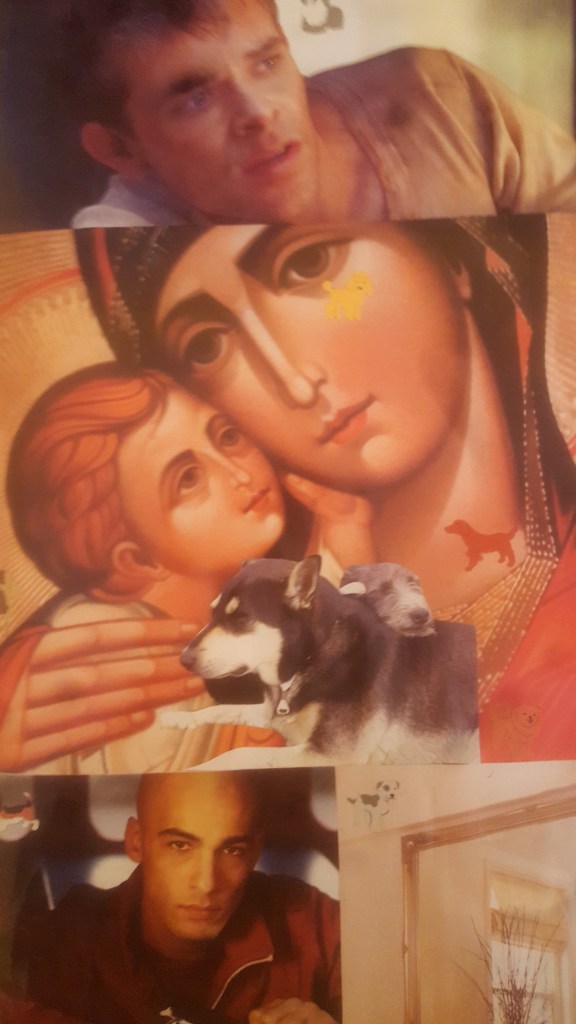
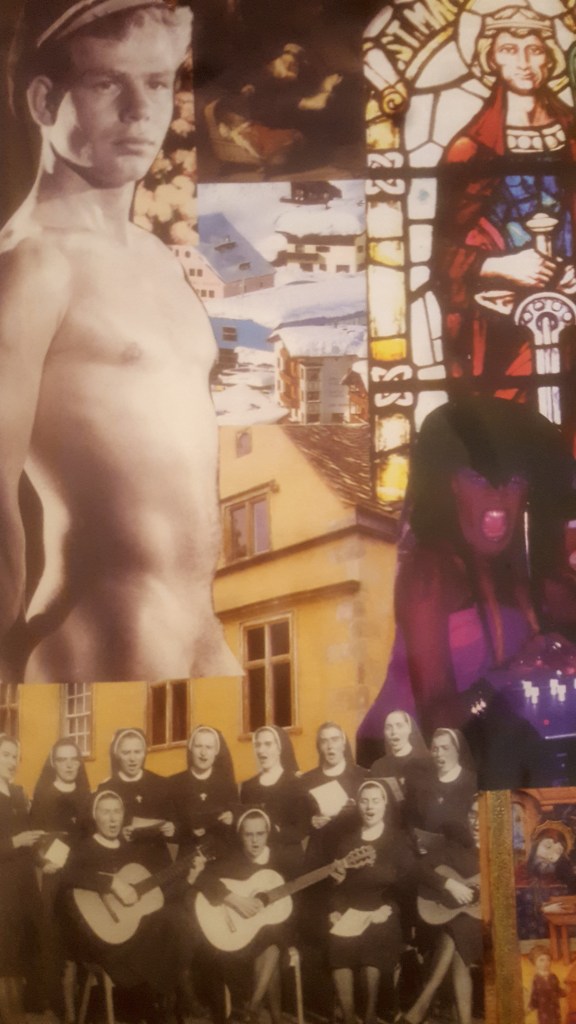
A picture for you, dear, just a picture to while away a few idle moments.
I know that in that terrible cell you were deprived even of visual stimuli, and so I celebrate your being – and our being, Oscar, dear – with a picture to set you thinking.
There is not much to report: the world is still coronacrazy and lost in the pandemic; my diet is going well and I am growing slimmer than I have been for many a year; diversions are few and far between – a coffee with a friend, cooking some chutney, catching up with soap operas. I know all of this will mean very little to you – so very different from the life you led – with your absinthe, hashish, and opiates.
You may be interested to know that all public theatres are now closed, because people cannot be in contact with each other, and the proximity of theatre seats therefore makes it impossible for people to attend. So now your only hope for immediate existence is mediated via television or radio – instruments that relay into the home your art and artifice. No more applauding crowds, no more speeches from the balcony; I am afraid such venues are at present permanently dark.
‘The Importance Of Being …..’ – I suppose people might start to forget!
Tell me, please, why it is that it is something of a learned human ‘nature’ to celebrate life in all of its rewards and plenitudes by overindulging in food and drink! I just do not understand it. Why is it that any form of celebration – even the celebration of the everyday going particularly well – has to be capped off with feasts and wine, and spirits and strong coffees, with sweetmeats and treats, all of which do more harm than good!
It seems to me that it is learned behaviour, but it is a very strange one. So, I am in a very good mood, and I have achieved whatever it is that I have achieved, maybe a trip out went well, maybe everything fell into place the way that I wanted it to, and so I decide I am going to treat myself, to round off a good day by spoiling myself. And there of course is the rub. It is literally spoiling myself!
Now I am not someone who is ridiculously over indulgent, as you well know. I will accept an alcoholic drink or two, I will partake of a bottle of wine, I will order a fairly extravagant meal in a restaurant, maybe a dessert, maybe some cheese and biscuits; but these occasions are actually few and far between, and in the current health dilemma that dominates all social interaction (see my earlier note to you entitled: Pandemic!), there is precious little opportunity to go out and make merry. So, like most of the populations of the world, any momentary celebrations have to be practised in the home. You well know from me, Oscar, that my home environment is singular, that I live alone, have occasional visitors, but that most of my time is spent on my own in my comfortable surroundings, and therefore able to indulge my tastes for celebratory meals at the drop of a hat! And I do so maybe once every week, perhaps once every ten days or so. And every time there is the same result, to a greater or lesser degree, of a hangover that forces me to waste much of the ensuing day in recovery, nursing myself through the stomach pains, and the headaches, and the inability to eat properly. I do not even really enjoy the celebration when it is happening! Yes, I must like the moment when the alcohol takes effect, when I feel excited and happy, laughing at life as it presents itself around me, but I always then go too far, have to be rid of the wine, and all of the food, and so devour and drink it all, go to bed not really aware of what I am doing, and sleep a very heavy sleep, to be awoken early with a chronic dehydration and the sensation that my body is in rebellion. And – one more and – I have been doing this for years, perhaps all my entire adult life!
It is socially acceptable, and in certain circumstances even required. I have been at important occasions where to refuse a drink, a toast to whatever, is frowned upon, and I have been with people who insist that they will buy you a drink, that you will drink it with them, whether you want it or not. I have had ‘fun’, shared happy times, tried new things, new beverages, new foodstuffs around the world, and not really taken account of the cumulative harm that I am doing to myself. You must know what I mean, Oscar dear, you were a gourmand and an imbiber with expensive tastes which you also indulged, and which you shared willy-nilly.
Well, nowadays I find myself saying every single time – it has to stop!
I have fairly recently conquered the excesses of my diet, and I intend also to limit to an absolute zero my intake of alcoholic beverages. You note I say ‘intend’, which leaves a certain wavering point, but I shall take things, as all the self help programmes dictate, one day at a time!
I have a suspicion that you never stopped at all – that you carried on with your indulgences until your very end, with only the enforced respite of imprisonment interrupting you. I get the impression that you had a sense of yourself as if you needed no improvement, despite the condemnation of your age, despite the wagging finger of censure. I suppose you felt you knew best.


 Letters to Oscar Wilde